Doberman vs German Shepherd: Which Breed Fits Your Lifestyle?

Doberman vs German Shepherd: Which Breed Fits Your Lifestyle?
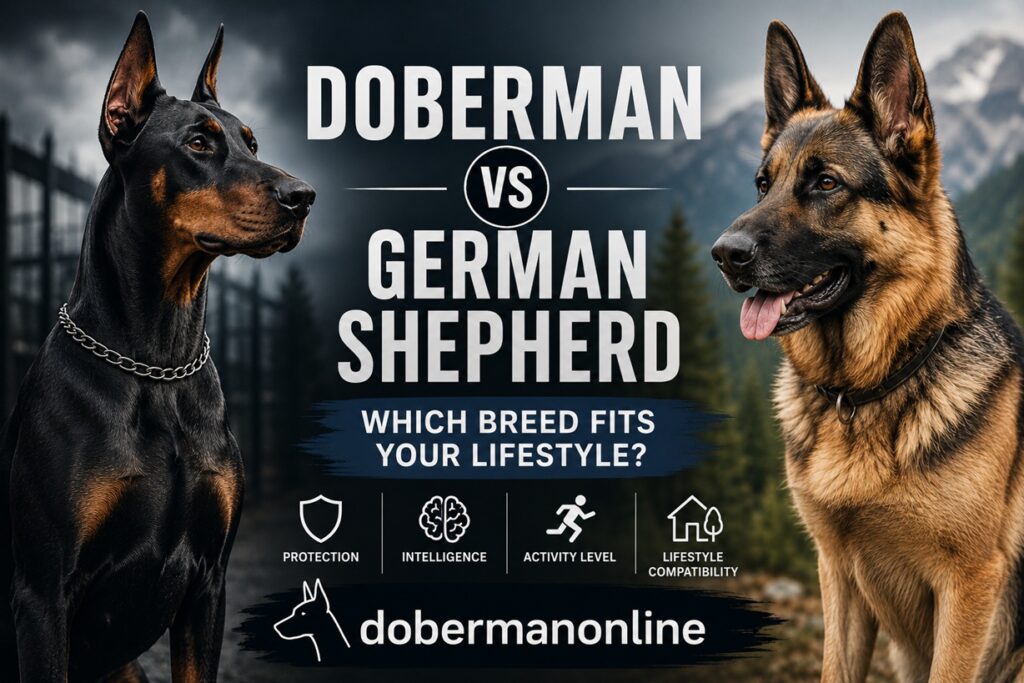
When it comes to elite, highly intelligent, and fiercely loyal working dogs, two breeds consistently dominate the conversation: the Doberman Pinscher and the German Shepherd Dog (GSD). Both possess a striking presence, incredible work ethics, and world-class guarding capabilities. However, despite their surface-level similarities, they are distinct breeds with different daily demands.
Choosing between a doberman vs german shepherd requires a deep understanding of their temperament, grooming needs, and activity levels.
Let’s break down the core differences to help you decide which powerhouse breed deserves a spot in your home.
Breed Origins and Core Purpose
Understanding what these dogs were originally bred to do explains much of their modern-day behavior and instinctual drives.
The German Shepherd: The Versatile Herder
Originally developed in Germany by Max von Stephanitz in the late 19th century, German Shepherds were bred for herding and protecting sheep. This background gives them an intense desire to please their handler, a strong herd-keeping instinct, and exceptional versatility that makes them perfect for modern police and military work.
The Doberman Pinscher: The Personal Protector
In contrast, Louis Dobermann bred the Doberman specifically for personal protection. They were designed to be sleek, intimidating, and deeply bonded to a single handler. While German Shepherds excel at managing a perimeter or a herd, Dobermans excel at close-quarters personal defense and remaining glued to their owner’s side.
Core Differences: Doberman vs German Shepherd
| Trait | Doberman Pinscher | German Shepherd |
| Grooming Needs | Very Low (Short, single coat) | High (Double coat, heavy shedding) |
| Temperament | Velcro dog, sensitive, alert | Loyal, highly adaptable, independent |
| Trainability | Highly intelligent, stubborn at times | Eager to please, exceptionally fast learner |
| Guard Instinct | Direct personal defense, physical deterrent | Vocal alarm, territory defense |
| Barking Level | Low to Moderate | Moderate to High |
Temperament and Family Compatibility
Both breeds are intensely loyal to their families, but they express that devotion in entirely different ways.
The “Velcro” Lifestyle of the Doberman
Dobermans are the ultimate “Velcro dogs.” They do not tolerate being left outside or separated from their humans for long periods. If you sit on the couch, your Doberman will want to sit directly on your lap. They are highly sensitive to their owner’s emotions and require a calm, steady leader.
The Adaptable Loyalty of the German Shepherd
German Shepherds are incredibly affectionate with their families, but they tend to be slightly more independent than Dobermans. They are generally more tolerant of hectic environments and adjust beautifully to large, active households. While they will follow you from room to room, they are content resting a few feet away rather than needing physical contact at all times.
Grooming and Maintenance: The Ultimate Dealbreaker
For many prospective owners, the absolute deciding factor between a doberman vs german shepherd comes down to coats and shedding.
-
Doberman Shedding: Dobermans have a short, single coat. They do shed light, needle-like hairs year-round, but a quick weekly brushing is usually enough to keep their coat gleaming. They lack a dense undercoat, meaning they rarely smell “doggy,” but they do get cold easily in the winter.
-
German Shepherd Shedding: German Shepherds are affectionately nicknamed “German Shedders” for a reason. They have a thick double coat that sheds heavily year-round and completely “blows” twice a year during seasonal changes. If you choose a GSD, you must invest in a high-quality vacuum and prepare for daily brushing.
Exercise and Training Demands
Neither of these breeds is suitable for a sedentary lifestyle. Both require heavy mental and physical stimulation to prevent destructive behaviors.
German Shepherds thrive on having a specific job, whether it’s advanced obedience, tracking, or agility. Dobermans, with their explosive athletic power, require intense cardio workouts alongside their mental drills. Training a German Shepherd often feels smoother because of their intense desire to please, whereas a Doberman may occasionally test boundaries with a stubborn, independent streak that requires firm, positive consistency.
Final Verdict: Which Breed is Right for You?
Choosing between these two iconic breeds comes down to your personal living situation:
-
Choose a Doberman if: You want a sleek, low-maintenance coat, desire a deeply affectionate personal protector that stays by your side 24/7, and can commit to intensive socialization to prevent over-guarding.
-
Choose a German Shepherd if: You don’t mind a lot of dog hair, want a highly versatile and eager-to-please companion, and prefer a dog that is slightly more independent and adaptable to busy family environments.
Doberman vs Pitbull: Which Breed Is Better for Protection, Families, and First-Time Owners?
Frequently Asked Questions (FAQ)
Is a Doberman or a German Shepherd a better guard dog?
Both are elite guardians. A German Shepherd tends to be more territorial and will bark loudly to alert you of intruders, making them great property guards. A Doberman is a personal protector; they are quieter but act as a more immediate, direct physical deterrent to threats.
Which breed sheds more, Dobermans or German Shepherds?
German Shepherds shed significantly more than Dobermans. German Shepherds have a dense double coat that requires daily brushing, while Dobermans have a short, single coat with very low grooming requirements.
Are Dobermans smarter than German Shepherds?
Both breeds are ranked in the top 5 smartest dog breeds globally. German Shepherds rank 3rd and Dobermans rank 5th. In reality, the difference in intelligence is negligible; German Shepherds are simply a bit more eager to please, while Dobermans can show a bit more independent stubbornness.