Doberman Puppy Feeding Schedule by Age: Complete Guide From 8 Weeks to 12 Months

Doberman Puppy Feeding Schedule by Age: Ultimate Guide
Feeding a Doberman puppy correctly during the first year is one of the most important factors in supporting healthy growth, strong bones, proper muscle development, and long-term health. Because Dobermans are a large and athletic breed, their nutritional needs change rapidly as they grow.
This doberman puppy feeding schedule by age will help you understand how much to feed your puppy, how often meals should be served, and what nutritional requirements should be prioritized during each stage of development.
Why a Proper Feeding Schedule Matters
Doberman puppies grow quickly during their first year. Feeding too little can result in nutritional deficiencies, while overfeeding may increase the risk of obesity, joint stress, and developmental issues.
A structured feeding schedule helps:
-
Maintain steady growth
-
Support healthy muscle development
-
Prevent digestive issues
-
Reduce overeating
-
Establish healthy eating habits
Doberman Puppy Feeding Schedule by Age
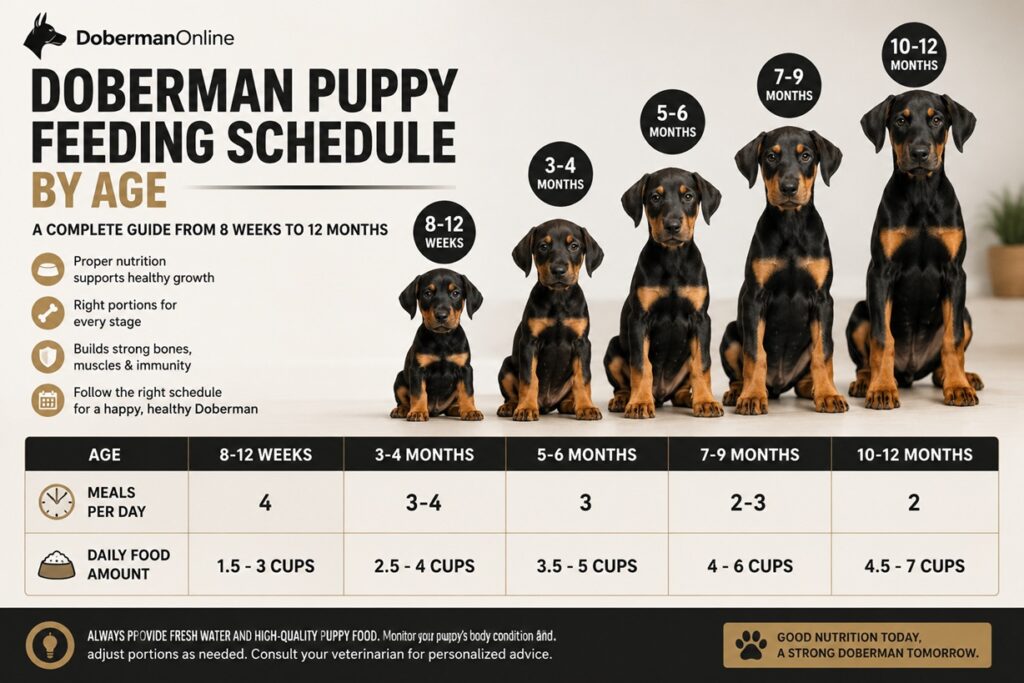
8 to 12 Weeks Old
At this age, Doberman puppies have recently been weaned and require frequent meals.
-
Meals Per Day: 4
-
Daily Food Amount: 1.5 to 3 cups of high-quality large-breed puppy food
During this stage, puppies should receive nutrient-dense food formulated specifically for large-breed puppies. Fresh water should always be available.
3 to 4 Months Old
Growth accelerates significantly during this period.
-
Meals Per Day: 3 to 4
-
Daily Food Amount: 2.5 to 4 cups
Monitor your puppy’s body condition rather than focusing solely on weight. A healthy Doberman puppy should have a visible waistline without prominent ribs.
5 to 6 Months Old
Most Doberman puppies experience a major growth phase between five and six months.
-
Meals Per Day: 3
-
Daily Food Amount: 3.5 to 5 cups
Continue feeding a high-quality large-breed puppy formula that contains balanced calcium and phosphorus levels.
7 to 9 Months Old
Growth begins to slow, but nutritional requirements remain high.
-
Meals Per Day: 2 to 3
-
Daily Food Amount: 4 to 6 cups
Avoid switching to adult dog food too early, as your puppy still requires nutrients designed for growth and development.
10 to 12 Months Old
Most Dobermans approach their adult height during this stage but continue filling out physically.
-
Meals Per Day: 2
-
Daily Food Amount: 4.5 to 7 cups
Many Dobermans can transition to a high-quality adult formula around 12 months, although some owners prefer waiting until 15 to 18 months depending on growth and veterinary recommendations.
Doberman Puppy Feeding Chart by Age
| Age | Meals Per Day | Daily Food Amount |
| 8–12 Weeks | 4 | 1.5–3 Cups |
| 3–4 Months | 3–4 | 2.5–4 Cups |
| 5–6 Months | 3 | 3.5–5 Cups |
| 7–9 Months | 2–3 | 4–6 Cups |
| 10–12 Months | 2 | 4.5–7 Cups |
What Type of Food Is Best for a Doberman Puppy?
The best food for a Doberman puppy should meet specific standards:
-
Be formulated specifically for large-breed puppies
-
Contain high-quality animal protein as the first ingredient
-
Include DHA for brain and eye development
-
Provide balanced calcium and phosphorus levels to protect growth plates
-
Meet AAFCO nutritional standards
Avoid foods that contain excessive fillers, artificial preservatives, or low-quality protein sources.
Common Feeding Mistakes to Avoid
Overfeeding
Many owners mistakenly believe rapid growth is beneficial. Excess weight can place unnecessary and dangerous stress on developing joints.
Too Many Treats
Treats should make up no more than 10% of your puppy’s daily caloric intake.
Frequent Food Changes
Switching dog food brands too often may cause severe digestive upset and loose stools.
Free Feeding
Leaving food available all day can encourage overeating and make house training significantly more difficult.
When Should You Switch to Adult Dog Food?
Most Dobermans can transition to adult food around 12 months of age. However, larger individuals or those prone to structural alignment issues may benefit from remaining on a puppy formula until 15 to 18 months. Consult your veterinarian to determine the best transition timeline for your specific dog.
Following a proper doberman puppy feeding schedule by age helps support healthy growth, strong muscles, and optimal development. Every puppy is different, so monitor body condition, activity levels, and overall health rather than relying solely on feeding charts. A consistent feeding routine combined with high-quality nutrition will give your Doberman puppy the best possible start in life.
Frequently Asked Questions (FAQ)
How much should a 3-month-old Doberman puppy eat?
Most 3-month-old Doberman puppies eat between 2.5 and 4 cups of high-quality puppy food daily, divided into three or four meals.
How many times a day should a Doberman puppy eat?
Doberman puppies generally eat four meals per day until 12 weeks old, three meals during adolescence, and two meals after about 10 months of age.
Can you overfeed a Doberman puppy?
Yes. Overfeeding can contribute to obesity, unnaturally rapid growth, and increased stress on developing joints and bones.
When should a Doberman puppy switch to adult food?
Most Dobermans transition to adult food around 12 months, although some large-breed lines may benefit from waiting until 15 to 18 months.
What is the best food for a Doberman puppy?
A high-quality large-breed puppy formula with balanced nutrients, adequate animal protein, and controlled calcium levels is generally the best choice.