Hypothyroidism in Dobermans: Signs, Diagnosis, Treatment, and Life Expectancy

Hypothyroidism in Dobermans: Signs, Diagnosis, Treatment, and Life Expectancy
Hypothyroidism is one of the most common endocrine disorders affecting Dobermans. This condition develops when the thyroid gland fails to produce enough thyroid hormones, leading to a slowdown in the body’s metabolism.
Because thyroid hormones influence nearly every organ system, hypothyroidism can cause a wide range of symptoms including weight gain, lethargy, hair loss, skin problems, and behavioral changes.
The good news is that hypothyroidism is highly manageable when diagnosed early. With proper treatment, most Dobermans can live normal, healthy lives.
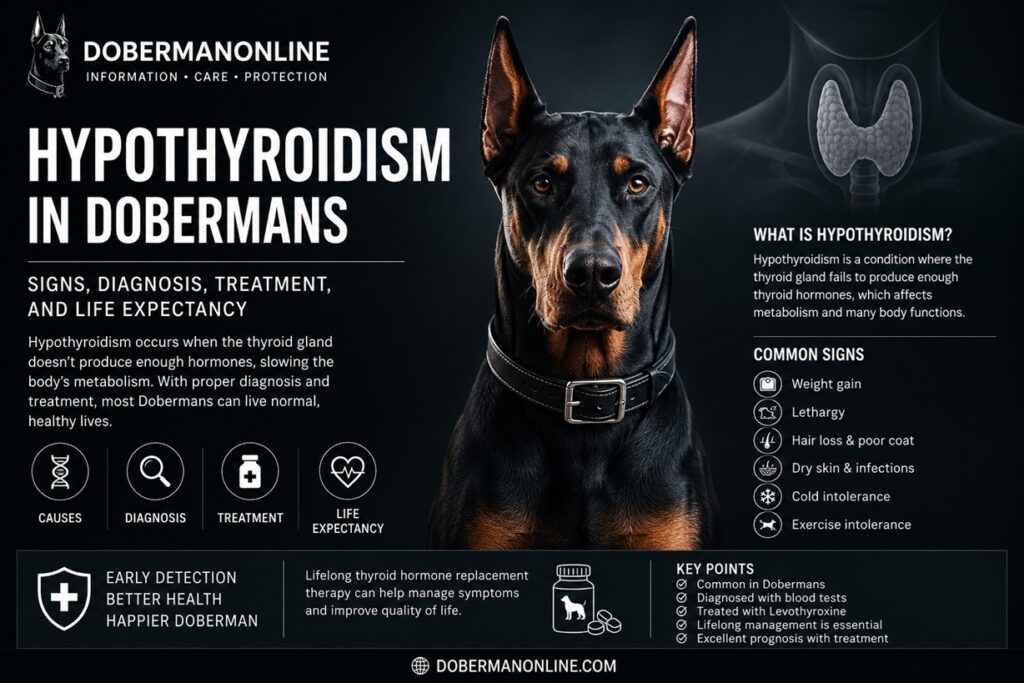
In this guide, you’ll learn everything Doberman owners need to know about hypothyroidism, including symptoms, causes, diagnosis, treatment options, and long-term management.
What Is Hypothyroidism?
Hypothyroidism occurs when the thyroid gland produces insufficient amounts of hormones, primarily thyroxine (T4) and triiodothyronine (T3).
These hormones regulate:
- Metabolism
- Body temperature
- Energy production
- Skin and coat health
- Heart function
- Muscle strength
- Neurological function
When hormone levels decrease, many body systems begin to slow down.
As a result, affected Dobermans often experience noticeable physical and behavioral changes.
Why Are Dobermans Prone to Hypothyroidism?
Dobermans are considered one of the breeds with an increased genetic predisposition to hypothyroidism.
The most common cause is autoimmune thyroiditis, a condition in which the immune system mistakenly attacks thyroid tissue.
Over time, the damaged thyroid gland loses its ability to produce adequate hormone levels.
Risk factors include:
- Genetic predisposition
- Family history of thyroid disease
- Middle age
- Autoimmune disorders
- Certain environmental influences
Most affected Dobermans are diagnosed between 4 and 10 years of age.
Common Signs of Hypothyroidism in Dobermans
Symptoms usually develop gradually.
Because the disease progresses slowly, many owners mistakenly assume the changes are part of normal aging.
Weight Gain
Unexplained weight gain is often one of the earliest warning signs.
Affected dogs may gain weight despite:
- No increase in food intake
- Normal activity levels
- Consistent feeding routines
Lethargy and Low Energy
Many Dobermans become noticeably less active.
Owners often report:
- Increased sleeping
- Reduced enthusiasm for walks
- Less interest in play
- General fatigue
Exercise Intolerance
Dogs may tire more quickly than before.
This symptom can occasionally resemble signs seen in Dobermans affected by Dilated Cardiomyopathy (DCM).
Hair Loss
Hair thinning is one of the most recognizable symptoms.
Common areas include:
- Tail
- Neck
- Flanks
- Hind legs
Unlike seasonal shedding, hypothyroidism-related hair loss often appears symmetrical.
Poor Coat Quality
The coat may become:
- Dry
- Brittle
- Thin
- Dull
Affected dogs often lose the healthy shine typical of the breed.
Recurrent Skin Infections
Low thyroid hormone levels can weaken normal skin defenses.
This may increase susceptibility to:
- Bacterial infections
- Yeast infections
- Chronic skin irritation
Cold Intolerance
Many affected dogs become unusually sensitive to cold weather.
They may:
- Seek warm areas
- Shiver more frequently
- Avoid cold outdoor conditions
Behavioral Changes
Some Dobermans experience:
- Depression
- Reduced alertness
- Anxiety
- Mental dullness
Although less common, behavioral changes can be significant in some cases.
Advanced Symptoms of Hypothyroidism
Without treatment, additional symptoms may develop.
These can include:
- Slow heart rate
- Muscle weakness
- Facial swelling
- Balance problems
- Chronic ear infections
- Neurological abnormalities
- Fertility issues
Advanced disease can affect multiple body systems simultaneously.
What Causes Hypothyroidism in Dobermans?
Several conditions can damage the thyroid gland.
Autoimmune Thyroiditis
This is the most common cause.
The immune system gradually destroys thyroid tissue, reducing hormone production over time.
Thyroid Atrophy
In some cases, thyroid tissue is replaced by fat.
This process causes progressive loss of gland function.
Rare Causes
Less common causes include:
- Thyroid tumors
- Congenital thyroid defects
- Certain medications
However, autoimmune thyroiditis remains responsible for most cases in Dobermans.
How Is Hypothyroidism Diagnosed?
Because symptoms overlap with many other conditions, laboratory testing is essential.
Physical Examination
Your veterinarian will evaluate:
- Weight changes
- Coat condition
- Skin health
- Heart rate
- Overall physical condition
Total T4 Test
The Total T4 blood test is often the first screening tool.
Low T4 levels may indicate hypothyroidism.
However, additional testing is usually necessary for confirmation.
Free T4 Test
The Free T4 test provides a more accurate measurement of biologically active thyroid hormone.
This test is often considered more reliable than Total T4 alone.
TSH Test
Canine Thyroid Stimulating Hormone (TSH) levels may be elevated when thyroid hormone production decreases.
Combining T4 and TSH results improves diagnostic accuracy.
Thyroid Autoantibody Testing
Autoantibody testing can identify autoimmune thyroiditis before severe thyroid damage occurs.
This is particularly useful in genetically predisposed breeds such as Dobermans.
Conditions That Can Mimic Hypothyroidism
Several disorders produce similar symptoms.
These include:
- Dilated Cardiomyopathy (DCM)
- Chronic skin allergies
- Color Dilution Alopecia
- Cushing’s Disease
- Obesity
- Age-related changes
This is why proper laboratory testing is essential before beginning treatment.
Treatment for Hypothyroidism in Dobermans
Fortunately, treatment is usually straightforward and highly effective.
Levothyroxine Therapy
The standard treatment is a synthetic thyroid hormone called Levothyroxine.
This medication replaces the missing thyroid hormone and restores normal metabolic function.
Benefits often include:
- Increased energy
- Improved coat quality
- Weight stabilization
- Better skin health
- Improved mood
Most dogs require lifelong treatment.
Monitoring During Treatment
Veterinarians typically perform follow-up blood tests to ensure hormone levels remain within the target range.
Testing is commonly performed:
- 6 to 8 weeks after starting treatment
- After dosage adjustments
- Every 6 to 12 months long-term
Regular monitoring helps maintain optimal results.
Diet and Weight Management
Many hypothyroid Dobermans struggle with weight gain.
Helpful strategies include:
- High-quality nutrition
- Portion control
- Regular exercise
- Routine weight monitoring
Owners should avoid excessive treats and maintain a healthy body condition score.
Living With a Doberman That Has Hypothyroidism
Most dogs respond exceptionally well to treatment.
Owners frequently report improvements in:
- Energy levels
- Coat condition
- Activity levels
- Mental alertness
- Overall quality of life
Medication compliance is critical.
Missing doses regularly may cause symptoms to return.
Life Expectancy of Dobermans With Hypothyroidism
The prognosis is generally excellent.
When properly managed:
- Most dogs live normal lifespans
- Symptoms are effectively controlled
- Quality of life remains high
Unlike many serious hereditary diseases, hypothyroidism rarely shortens lifespan when treated appropriately.
Can Hypothyroidism Be Prevented?
There is currently no guaranteed method of prevention.
However, responsible breeding practices may help reduce inherited risk.
Breeders should:
- Screen breeding dogs
- Maintain health records
- Monitor thyroid function within breeding lines
Early detection remains the most effective strategy.
When Should You Contact a Veterinarian?
Schedule a veterinary appointment if your Doberman develops:
- Unexplained weight gain
- Persistent lethargy
- Hair loss
- Dry skin
- Recurrent infections
- Behavioral changes
- Exercise intolerance
Early diagnosis often leads to better long-term outcomes.
Hypothyroidism in Dobermans is a common but highly manageable condition. Although symptoms such as weight gain, fatigue, hair loss, and skin problems can significantly affect quality of life, proper diagnosis and treatment often result in dramatic improvement.
With lifelong Levothyroxine therapy, regular veterinary monitoring, and healthy lifestyle management, most Dobermans with hypothyroidism enjoy long, active, and happy lives.
Understanding the warning signs and seeking veterinary care early can make a significant difference in your dog’s overall health and well-being.
Other Common Health Conditions in Dobermans
Dobermans are predisposed to several inherited health conditions beyond hypothyroidism. Understanding these disorders can help owners recognize symptoms early and seek appropriate veterinary care.
Dilated Cardiomyopathy (DCM)
Dilated Cardiomyopathy is one of the most serious diseases affecting the breed. Some symptoms of DCM, including fatigue, weakness, and exercise intolerance, may occasionally resemble signs of hypothyroidism.
Von Willebrand Disease
Von Willebrand Disease is a hereditary bleeding disorder commonly found in Dobermans. Responsible breeders often screen for both thyroid disorders and inherited bleeding conditions to improve overall breed health.
Frequently Asked Questions (FAQ)
What is hypothyroidism in Dobermans?
Hypothyroidism is a hormonal disorder that occurs when the thyroid gland fails to produce enough thyroid hormones, slowing the body’s metabolism.
What are the first signs of hypothyroidism in Dobermans?
Common early signs include weight gain, lethargy, hair loss, poor coat quality, and reduced exercise tolerance.
Is hypothyroidism common in Dobermans?
Yes. Dobermans are considered one of the breeds with an increased risk of developing hypothyroidism.
Can hypothyroidism be cured?
There is no permanent cure, but lifelong treatment with thyroid hormone replacement is highly effective.
How is hypothyroidism diagnosed?
Veterinarians typically use blood tests including Total T4, Free T4, and TSH measurements.
What causes hypothyroidism in Dobermans?
The most common cause is autoimmune thyroiditis, where the immune system attacks the thyroid gland.
Can hypothyroidism cause hair loss?
Yes. Hair thinning, coat changes, and symmetrical hair loss are among the most common symptoms.
What medication is used to treat hypothyroidism?
Most dogs are treated with Levothyroxine, a synthetic thyroid hormone replacement medication.
Can Dobermans live normal lives with hypothyroidism?
Yes. Most affected Dobermans live normal, healthy lives when properly treated and monitored.
What is the life expectancy of a Doberman with hypothyroidism?
Life expectancy is generally normal when the condition is diagnosed early and managed appropriately.
 YouTube: DobermanOnline