Do Dobermans Bond With One Person? The Truth About Their Loyalty

Do Dobermans Bond With One Person? The Truth About Their Loyalty (2026 Guide)
Dobermans are famous for their intelligence, loyalty, and deep devotion to their owners. If you’ve ever heard someone describe a Doberman as a “one-person dog,” you may wonder whether it’s actually true. Do Dobermans form an exclusive bond with just one person, or can they love the entire family equally?
The answer is a little more complex than a simple yes or no. While many Dobermans naturally develop an especially strong attachment to one individual, they are also capable of building loving and trusting relationships with multiple family members.
Understanding how Dobermans form bonds can help you strengthen your relationship and ensure your dog feels secure, confident, and happy.
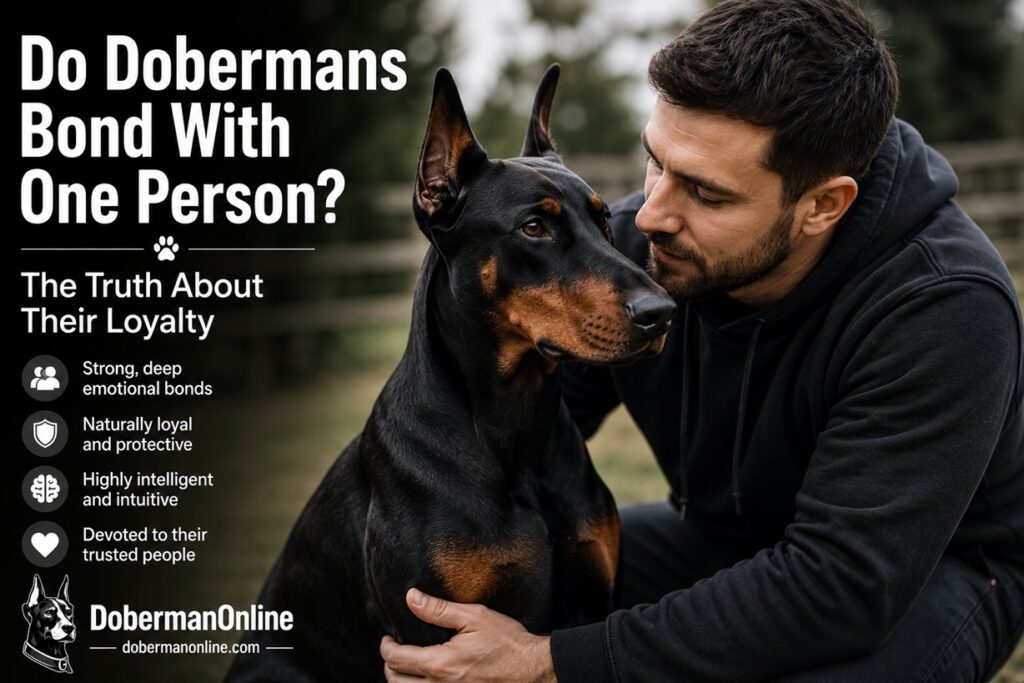
Do Dobermans Bond With One Person? (Quick Answer)
Yes, many Dobermans naturally develop a stronger bond with one person, especially the individual who spends the most time training, exercising, feeding, and interacting with them. However, well-socialized Dobermans are fully capable of loving and protecting every member of the household.
Why Are Dobermans So Loyal?
Dobermans were originally bred as personal protection dogs.
Their job required them to stay close to one handler, remain attentive, and respond quickly to commands. Although today’s Dobermans are often family pets, they still retain this strong desire to stay close to the people they trust most.
Their loyalty comes from several traits, including:
- High intelligence
- Strong desire to please
- Excellent memory
- Confidence
- Deep emotional attachment to their family
This combination makes the Doberman one of the most devoted dog breeds in the world.
How Do Dobermans Choose Their Favorite Person?
A Doberman doesn’t randomly choose a favorite person. Instead, they build trust through consistent positive experiences.
They often become closest to the person who:
- Feeds them regularly
- Takes them for walks
- Participates in training
- Plays with them every day
- Provides comfort during stressful situations
- Spends the most quality time with them
Trust is built over time through routine and positive interaction rather than dominance.
Can Dobermans Love the Whole Family?
Absolutely.
Even if your Doberman has a favorite person, that doesn’t mean they ignore everyone else.
Most Dobermans enjoy spending time with:
- Adults
- Children they know well
- Other family members
- Frequent visitors they trust
They often greet each family member differently but still form meaningful relationships throughout the household.
Signs Your Doberman Has Bonded With You
A strongly bonded Doberman may:
- Follow you from room to room
- Make frequent eye contact
- Lean against you
- Sleep near you
- Become excited when you come home
- Check on you regularly
- Stay close during walks without being asked
These behaviors are normal signs of trust and attachment rather than dependence.
Can a Doberman Become Too Attached?
Yes.
Because Dobermans are naturally people-oriented, they can sometimes become overly dependent on one person.
This may lead to:
- Separation anxiety
- Excessive whining
- Destructive behavior when left alone
- Constant shadowing
- Difficulty relaxing without their favorite person
Early independence training and gradual alone-time exercises can help prevent unhealthy attachment.
Can a Doberman Bond With a New Owner?
Yes.
Although Dobermans are deeply loyal, they can form strong bonds with a new owner after adoption or rehoming.
The process requires:
- Patience
- Consistency
- Positive reinforcement
- Daily routines
- Trust-building activities
Some dogs adjust within a few weeks, while others may need several months depending on their past experiences.
Does Gender Matter?
Not necessarily.
Some Dobermans prefer men, while others prefer women or children. In most cases, the quality of interaction matters far more than gender.
The strongest bonds usually develop with the person who consistently provides care, training, and positive experiences.
How to Build a Strong Bond With Your Doberman
You can strengthen your relationship by:
- Training together every day
- Taking daily walks
- Playing interactive games
- Using positive reinforcement
- Maintaining a predictable routine
- Spending quality time together
- Respecting your dog’s need for rest and personal space
Small, consistent interactions often build stronger relationships than occasional long sessions.
Dobermans often form incredibly deep emotional connections with their favorite people. This close relationship also helps explain why many owners believe their dog can recognize their moods and emotions. If you’d like to learn more about how Dobermans respond to human feelings and behavior, read our guide on Can Dobermans Understand Their Owner’s Emotions?
Do Dobermans really bond with only one person?
Many Dobermans naturally develop a stronger bond with one individual, but they can also build loving and loyal relationships with every member of the family when properly socialized.
How do Dobermans choose their favorite person?
Dobermans usually bond most closely with the person who spends the most time feeding, training, walking, playing, and caring for them. Trust and consistent interaction are the biggest factors.
Can a Doberman bond with a new owner?
Yes. With patience, consistency, and positive experiences, Dobermans can form strong bonds with a new owner after adoption or rehoming. The adjustment period varies from dog to dog.
Are Dobermans good family dogs if they have a favorite person?
Absolutely. Even if a Doberman has a favorite person, they can still be affectionate, protective, and gentle with the entire family, including children, when properly trained and socialized.
Can a Doberman become too attached to one person?
Yes. Some Dobermans may become overly attached, which can contribute to separation anxiety or excessive dependence. Early socialization, independence training, and regular interaction with all family members can help encourage a healthy balance.