Doberman Hip Dysplasia: Symptoms, Treatment & Prevention Guide

Doberman Hip Dysplasia: Symptoms, Treatment & Prevention Guide
Hip dysplasia is one of the most recognized orthopedic conditions in dogs, but many Doberman owners are surprised to learn that this athletic and powerful breed can also be affected. While Dobermans are generally less prone to hip dysplasia than some giant breeds, the condition still occurs and can significantly impact mobility, comfort, and quality of life.
Early recognition of subtle symptoms allows owners to seek veterinary care before permanent joint damage progresses. Understanding the causes, diagnosis, treatment options, and preventive strategies can help Dobermans remain active and comfortable for many years.
What Is Hip Dysplasia?
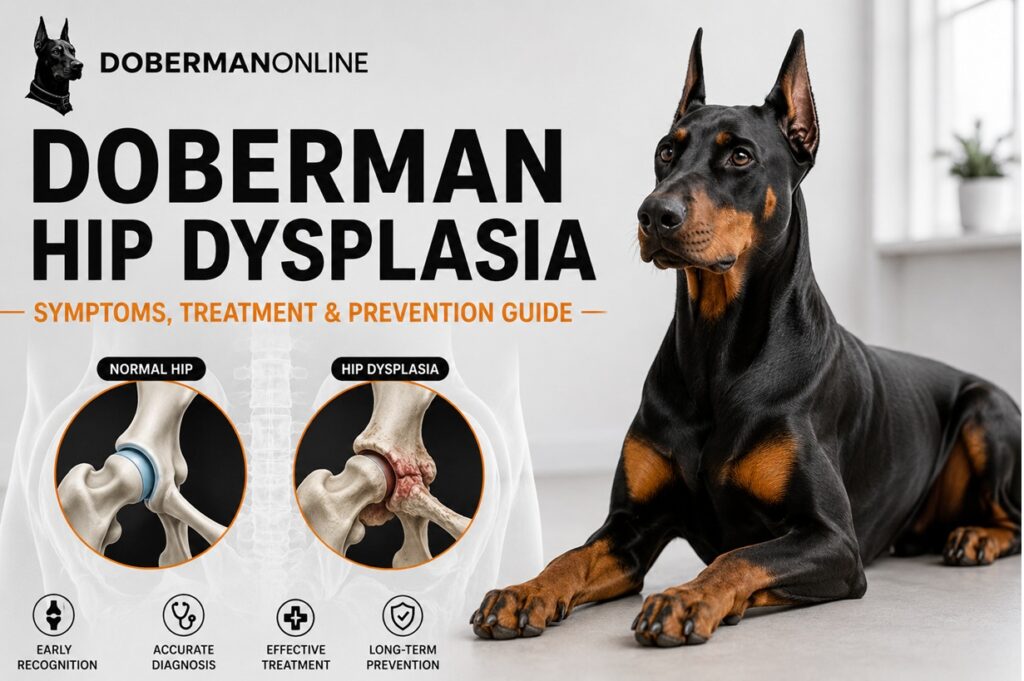
Hip dysplasia is a developmental orthopedic disorder that affects the hip joint.
In a healthy dog, the ball-shaped head of the femur fits smoothly inside the hip socket, allowing normal movement without pain.
In dogs with hip dysplasia, the joint develops abnormally. Instead of moving smoothly, the bones rub against each other, causing instability, inflammation, cartilage damage, and eventually arthritis.
The condition usually develops during growth but may not produce noticeable symptoms until adulthood.
Are Dobermans Prone to Hip Dysplasia?
Dobermans have a lower incidence of hip dysplasia than breeds such as German Shepherds or Labrador Retrievers, but they are not immune.
Several factors contribute to risk, including:
- Genetics
- Rapid growth during puppyhood
- Excess body weight
- Improper nutrition
- High-impact exercise during development
Responsible breeders screen breeding dogs to reduce the likelihood of passing the condition to future generations.
Signs and Symptoms
Symptoms may appear gradually and become more noticeable after exercise or as the dog ages.
Common signs include:
- Stiffness after resting
- Difficulty standing up
- Bunny hopping while running
- Reduced willingness to jump
- Limping after activity
- Decreased exercise tolerance
- Muscle loss in the hind legs
- Swaying gait
Some Dobermans continue to play normally while hiding significant discomfort, making early observation especially important.
Early Symptoms in Young Dobermans
Young dogs may show subtle changes long before arthritis develops.
Owners may notice:
- Sitting awkwardly
- Reluctance to climb stairs
- Slower movement after naps
- Hesitation when entering vehicles
- Fatigue during walks
Because these signs can resemble neurological disorders affecting the rear limbs, veterinarians often perform a complete orthopedic and neurological examination. Similar mobility problems may also occur with Wobbler Syndrome in Dobermans: Early Signs, Treatment, and Daily Management Guide, making an accurate diagnosis essential.
What Causes Hip Dysplasia?
Hip dysplasia develops through a combination of inherited and environmental factors.
Genetics
The most significant risk factor is genetics.
Even puppies that appear healthy can develop hip dysplasia if they inherit genes associated with poor joint development.
Rapid Growth
Large-breed puppies grow quickly during their first year.
Excess calories and uncontrolled growth may increase stress on developing joints.
Excess Weight
Additional body weight places constant pressure on the hip joints.
Over time, this extra stress accelerates cartilage wear and worsens arthritis.
Maintaining a lean body condition throughout life is one of the most effective preventive strategies. Owners who are unsure whether their Doberman is at a healthy weight can compare their dog’s development using Doberman Weight Chart: Healthy Weight by Age.
How Veterinarians Diagnose Hip Dysplasia
Diagnosis begins with a physical examination.
Your veterinarian will evaluate:
- Range of motion
- Pain during hip extension
- Muscle symmetry
- Walking pattern
- Joint stability
If hip dysplasia is suspected, radiographs (X-rays) are usually recommended.
X-rays allow veterinarians to evaluate:
- Joint alignment
- Socket depth
- Arthritis changes
- Bone remodeling
Sedation is often used to obtain accurate positioning.
Treatment Options
Treatment depends on:
- Age
- Severity
- Pain level
- Activity level
- Presence of arthritis
Many Dobermans live comfortable lives with conservative management.
Weight Management
Keeping a Doberman lean is one of the most effective ways to reduce joint stress.
Even a small reduction in body weight can significantly improve mobility and decrease discomfort.
Exercise Modification
Complete rest is rarely recommended.
Instead, veterinarians usually encourage controlled low-impact exercise such as:
- Walking
- Swimming
- Underwater treadmill therapy
- Gentle hill walking
High-impact activities like repetitive jumping and excessive running on hard surfaces may worsen symptoms.
Physical Rehabilitation
Canine rehabilitation specialists may recommend:
- Stretching exercises
- Balance training
- Therapeutic massage
- Hydrotherapy
- Strength-building exercises
Rehabilitation helps maintain muscle mass while improving joint stability.
Medications
Pain management often includes:
- Non-steroidal anti-inflammatory drugs (NSAIDs)
- Prescription pain medications
- Joint-support supplements when appropriate
Medication plans should always be supervised by a veterinarian.
Joint Supplements
Many veterinarians recommend supplements containing:
- Glucosamine
- Chondroitin sulfate
- Omega-3 fatty acids
- Green-lipped mussel extract
Although supplements cannot reverse hip dysplasia, they may support joint health and reduce inflammation in some dogs.
Surgical Treatment
Severe cases may require surgery.
Available procedures include:
Femoral Head Ostectomy (FHO)
The damaged portion of the joint is removed, allowing scar tissue to create a functional false joint.
Total Hip Replacement (THR)
The diseased joint is replaced with an artificial implant.
This procedure often provides excellent long-term pain relief and improved mobility in appropriate candidates.
Can Hip Dysplasia Be Prevented?
There is no guaranteed way to prevent inherited hip dysplasia.
However, owners can reduce risk by:
- Choosing puppies from health-tested parents
- Feeding balanced large-breed nutrition
- Avoiding obesity
- Preventing excessive exercise during growth
- Maintaining lifelong muscle strength
These strategies support healthy joint development and may delay arthritis progression.
Living With a Doberman That Has Hip Dysplasia
Many Dobermans continue to enjoy an active and fulfilling life after diagnosis.
Simple adjustments at home can improve comfort:
- Orthopedic bedding
- Non-slip flooring
- Ramps instead of stairs
- Controlled exercise routines
- Regular veterinary monitoring
Consistency is often more beneficial than occasional intense activity.
When Should You See a Veterinarian?
Schedule an examination if your Doberman develops:
- Persistent limping
- Difficulty standing
- Reluctance to exercise
- Pain after activity
- Loss of muscle mass
- Changes in gait
Early diagnosis provides more treatment options and may slow long-term joint degeneration.
Frequently Asked Questions
Is hip dysplasia common in Dobermans?
Hip dysplasia is less common in Dobermans than in some other large breeds, but it still occurs and can significantly affect mobility and comfort.
At what age do symptoms appear?
Some puppies show signs during growth, while others may not develop noticeable symptoms until adulthood when arthritis begins to progress.
Can a Doberman with hip dysplasia still exercise?
Yes. Controlled low-impact exercise is generally recommended to maintain muscle strength and joint function while avoiding excessive stress.
Can hip dysplasia be cured?
There is no complete cure, but weight management, rehabilitation, medication, and surgery can significantly improve quality of life.
Does every Doberman with hip dysplasia need surgery?
No. Many dogs respond well to conservative treatment, and surgery is typically reserved for severe or advanced cases.