Wobbler Syndrome in Dobermans: Early Signs, Treatment, and Daily Management Guide

Wobbler Syndrome in Dobermans: Early Signs, Treatment, and Daily Management Guide
The Doberman Pinscher is a breed celebrated worldwide for its muscular build, athletic prowess, and elegant gait. However, beneath this powerful and noble exterior lies a genetic predisposition to certain serious neurological conditions. One of the most prevalent and heartbreaking spinal disorders seen in this breed is Wobbler Syndrome in Dobermans (medically known as Cervical Spondylomyelopathy or CSM).
For many Doberman owners in the United States and global English-speaking communities, the initial symptoms of this condition are easily mistaken for mere clumsiness, natural aging, or a temporary muscle strain. However, recognizing the early warning signs of this neurological disease can make a monumental difference in your dog’s long-term quality of life and mobility.
Learn the early symptoms, diagnosis options, treatment costs, and home care tips for Wobbler Syndrome in Doberman Pinschers.
What is Wobbler Syndrome in Dobermans?
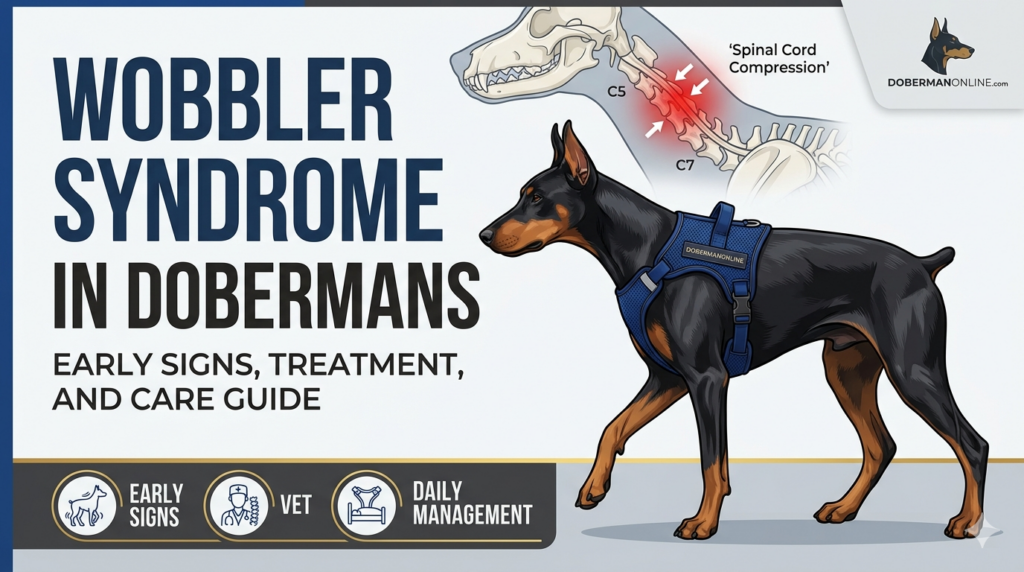
Wobbler Syndrome is a neurological disease affecting the cervical spine (the neck area) of large and giant breed dogs. In Dobermans, it is primarily characterized by a combination of intervertebral disc slipping (disc protrusion) and a narrowing of the spinal canal, which ultimately leads to chronic compression of the spinal cord.
When the spinal cord in the neck is compressed, nerve signals traveling from the brain to the rest of the body are disrupted. This structural compression specifically impacts:
-
The Cervical Region: Causing severe localized neck pain and stiffness.
-
The Spinal Cord: Leading to progressive neurological deficits.
-
Hind Leg Coordination: Resulting in the classic “wobbly” walking pattern.
-
Muscle Control: Causing atrophy due to nerve damage and lack of proper usage.
Why Are Doberman Pinschers Prone to Wobbler Syndrome?
While any large breed can develop CSM, Dobermans are uniquely vulnerable due to a combination of genetic factors and physical conformation. Veterinarians point out several core risk factors:
-
Genetic Predisposition: Hereditary factors play a massive role. It is estimated that a significant percentage of Dobermans carry genes that influence the abnormal shape and instability of the lower neck vertebrae (usually C5, C6, and C7).
-
Rapid Growth Spurns: High-protein diets or over-supplementation during puppyhood can accelerate bone growth faster than the spinal canal can adapt, putting early pressure on the spinal cord.
-
Conformational Traits: Dobermans naturally have long, elegant necks. While beautiful, this long lever arm puts extra mechanical stress on the lower cervical spine during running, playing, and protection training (such as bite work).
-
Age-Related Changes: In Dobermans, Wobbler Syndrome typically manifests as a “disc-associated” condition, meaning it usually appears in middle-aged to senior dogs (typically between 3 to 7 years old) as the spinal discs degenerate over time.
Recognizing the Early Signs: The “Wobbly” Gait
Wobbler Syndrome rarely happens overnight; it usually starts with subtle, easily missed signals. As a Doberman owner, you should look out for the following clinical signs:
-
The “Floating” Hind Legs: A strange, uncoordinated, or unstable walk where the hind legs seem to drift outward or sway side to side.
-
Scuffing and Knuckling: Your dog may drag their hind toes along the pavement while walking. You might hear their toenails clicking or scraping on hard surfaces.
-
Wide-Based Stance: When standing still, the dog will spread its hind legs wide apart to maintain balance.
-
Severe Neck Pain: Holding the head down low, reluctance to turn the head to shake, or yelping when the neck is touched or moved.
-
Difficulty Rising: Struggling to stand up from a lying position or hesitating before climbing stairs or jumping into a car.
“Many US owners describe the early stages by saying, ‘It looks like my dog’s back legs simply belong to someone else, or they forgot how to control them.'”
Conditions Often Confused with Wobbler Syndrome
Not every stumble means your Doberman has Wobbler Syndrome. It is vital to get a professional diagnosis because the symptoms heavily overlap with other conditions common in large breeds:
-
Hip Dysplasia or Arthritis: Severe joint pain can cause weakness and an altered gait, but it lacks the specific neurological “knuckling” of the paws.
-
Cervical Intervertebral Disc Disease (IVDD): While related to disc issues, classic IVDD usually presents with acute, sudden paralysis rather than the progressive “wobbling” seen in chronic CSM.
-
Cruciate Ligament Tears (CCL): Knee injuries cause clear lameness but usually affect one leg predominantly.
How is Wobbler Syndrome Diagnosed by US Veterinarians?
If you suspect your Doberman is showing signs of spinal compression, an immediate consultation with a board-certified veterinary neurologist is highly recommended.
(Aşağıdaki tabloyu olduğu gibi kopyalayıp WordPress’e yapıştırabilirsiniz, otomatik tabloya dönüşecektir):
| Diagnostic Tool | What It Reveals | Approximate Cost Range (US) |
| Neurological Exam | Assesses reflexes, proprioception (paw positioning), and pinpoint pain. | $150 – $300 |
| Digital X-Rays | Rules out bone fractures, severe arthritis, or obvious bone tumors. | $200 – $450 |
| MRI Scan (Gold Standard) | Provides detailed images of the soft tissues, spinal cord compression, and discs. | $2,000 – $3,500 |
| CT Scan | Excellent for evaluating the bony changes in the vertebral canal. | $1,500 – $2,500 |
Note: Accurate diagnosis via MRI is crucial before considering any surgical intervention, as it shows the exact location and severity of the spinal cord pinch.
Treatment Options: Medical vs. Surgical
Treatment plans for Wobbler Syndrome depend entirely on the progression of the disease, the dog’s age, and financial considerations.
1. Conservative Medical Management
For early-stage or mild cases, or when surgery isn’t a viable option due to age or budget constraints, medical management aims to reduce inflammation and manage pain:
-
Corticosteroids or NSAIDs: Medications like Prednisone or Carprofen are prescribed to reduce swelling around the spinal cord.
-
Strict Crate Rest: Limiting movement for several weeks allows acute inflammation to subside.
-
Holistic and Physical Therapy: Laser therapy, acupuncture, and hydrotherapy (underwater treadmills) have shown great success in maintaining muscle mass and reducing neurological discomfort in American veterinary practices.
2. Surgical Intervention
If the dog is paralyzed, rapidly deteriorating, or in unmanageable pain, spinal surgery is the most definitive option. Surgical techniques aim to decompress the spinal cord or stabilize the unstable neck vertebrae (spinal fusion). While expensive (often ranging from $6,000 to $10,000+ in the US), it offers the highest chance of restoring normal mobility in eligible dogs.
Home Care and Management: Improving Your Doberman’s Quality of Life
Whether your dog undergoes surgery or is medically managed, altering their daily routine is mandatory to protect their fragile neck:
-
Switch to a Chest Harness Immediately: Never attach a leash to a neck collar on a Doberman prone to Wobbler’s. A supportive chest harness removes all mechanical strain from the cervical spine.
-
Invest in Non-Slip Rugs: Hardwood, tile, or laminate floors are incredibly dangerous for a wobbly dog. Cover high-traffic areas with rubber-backed mats or runners to prevent slips and further spinal trauma.
-
Elevate Food and Water Bowls: Forcing a Doberman to bend its neck down to the floor to eat strains the cervical vertebrae. Raise their bowls to chest height.
-
Use an Orthopedic Memory Foam Bed: A high-quality orthopedic bed distributes weight evenly and cushions the spine during long periods of rest.
-
Strict Weight Control: Excess weight puts unnecessary burden on the spine and limbs. Maintain a lean body condition score under vet supervision.
Wobbler Syndrome in Dobermans is undoubtedly a challenging diagnosis, but it does not have to be an immediate end to your dog’s happiness. When caught in its early stages, through proactive veterinary care, proper harness usage, and supportive home adjustments, many Doberman Pinschers continue to enjoy a comfortable, loving, and mobile life with their families.
Clinical Guide to Doberman Dermatological Pathology: Subcutaneous Lipomas and Color Dilution Alopecia (CDA)
FAQ
-
Can a Doberman fully recover from Wobbler Syndrome?
-
Recovery depends heavily on the severity of the spinal compression. While surgery can significantly improve or restore mobility, mild cases managed with medication can stabilize for years but may not achieve a 100% cure.
-
-
Is Wobbler Syndrome fatal in Doberman Pinschers?
-
Wobbler Syndrome itself is not directly fatal. However, if left untreated, the progressive paralysis can severely degrade the dog’s quality of life, which sometimes leads owners to make the difficult choice of euthanasia.
-
-
Can young Dobermans develop Wobbler Syndrome?
-
Yes. While the disc-associated form usually appears in adult Dobermans (3-7 years old), a bone-associated form of Wobbler’s can affect giant breeds and fast-growing puppies as young as several months old.
-
-
Should a Doberman with Wobbler’s continue to exercise?
-
High-impact activities like jumping, running, or protection training must be avoided. However, low-impact exercises like controlled leash walking on a harness or veterinary hydrotherapy are excellent for preventing muscle loss.
 YouTube: DobermanOnline
-