What Can Dobermans Not Eat? Toxic Foods & Vet Nutrition Guide

What Can Dobermans Not Eat? Toxic Foods & Vet Nutrition Guide
The Doberman Pinscher is a breed celebrated worldwide for its muscular build, athletic prowess, and elegant gait. However, beneath this powerful and noble exterior lies a genetic predisposition to certain serious health conditions. One of the most critical aspects of caring for this breed is understanding their unique dietary needs and vulnerabilities.
For many Doberman owners in the United States and global English-speaking communities, the initial symptoms of food toxicity are easily mistaken for minor stomach upset or temporary laziness. However, recognizing what foods are dangerous can make a monumental difference in your dog’s long-term health and survival.
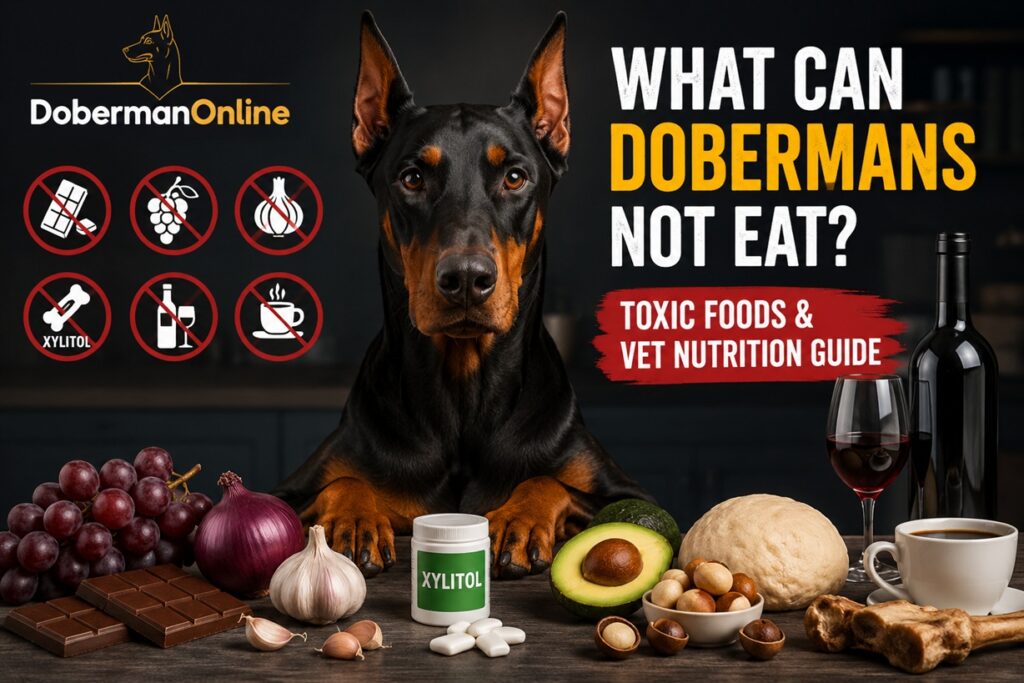
What Can Dobermans Not Eat? A comprehensive list of toxic foods and dangerous ingredients for Doberman Pinschers.
The Most Dangerous Toxic Foods for Dobermans
Chocolate and Cocoa Products
Chocolate is perhaps the most notorious canine toxin, yet it remains a frequent cause of accidental poisoning. Chocolate contains theobromine and caffeine, both of which are stimulants that dogs metabolize much slower than humans. Dark chocolate, baking chocolate, and pure cocoa powder carry the highest concentration of these toxins.
Ingesting chocolate can cause:
-
Severe vomiting and diarrhea
-
Abnormal heart rhythms (arrhythmia)
-
Muscle tremors and extreme restlessness
-
Seizures, collapse, and potentially death
Onions, Garlic, Chives, and Leeks (Allium Family)
Whether raw, cooked, dehydrated, or in powder form, any vegetable in the Allium family is highly toxic to Dobermans. These foods contain thiosulfate, a compound that damages a dog’s red blood cells, eventually causing them to rupture. This leads to a condition called hemolytic anemia.
Symptoms of Allium toxicity often develop over several days and include:
-
Lethargy and weakness
-
Pale gums
-
Rapid breathing or elevated heart rate
-
Loss of appetite and collapse
Grapes and Raisins
While the exact chemical compound responsible for grape toxicity remains a subject of ongoing veterinary research, its catastrophic effects are undeniable. Ingestion of even a single grape or raisin can trigger sudden, acute kidney failure in sensitive dogs. Because there is no established “safe dose,” grapes and raisins must be strictly banned from your Doberman’s environment.
Avocados
Avocados contain a fungicidal toxin called persin. While dogs are more resilient to persin than birds or horses, it can still cause mild to moderate stomach upset in Dobermans. More importantly, the large, slippery avocado pit poses a massive mechanical hazard, frequently causing dangerous intestinal blockages that require emergency surgery.
Alcohol and Caffeine
Never underestimate the danger of a spilled drink. Beverages containing alcohol or caffeine (coffee, tea, soda, energy drinks) are rapidly absorbed by a dog’s system. They can severely depress the central nervous system, cause respiratory distress, trigger dangerous spikes in blood pressure, and cause fatal cardiac arrest.
Human Foods That Trigger Chronic Illness in Dobermans
Fatty, Fried, and Highly Seasoned Foods
Dobermans are deep-chested dogs with sensitive gastrointestinal tracts. Sharing your fried chicken, greasy burgers, or highly spiced meats can cause acute pancreatitis—a painful and potentially fatal inflammation of the pancreas. Stick to lean, unseasoned proteins if you must give human snacks.
Processed Deli Meats (Hot Dogs, Salami, Bacon)
Processed meats are loaded with sodium, chemical preservatives, and artificial flavorings. High sodium intake throws off a dog’s electrolyte balance, leading to excessive thirst, dehydration, vomiting, and potential sodium ion poisoning.
The Hidden Killer: Xylitol (Birch Sugar)
Xylitol is an artificial sweetener found in sugar-free gums, candies, baked goods, and even some brands of peanut butter in the United States. In dogs, Xylitol triggers a massive, sudden release of insulin, causing blood sugar levels to crash dangerously within minutes (hypoglycemia). It also directly causes acute, irreversible liver failure. Always check the ingredients of your peanut butter before using it as a treat.
The Danger of Bones: Fiction vs. Fact
While pop culture portrays dogs chewing on bones, veterinarians strongly advise against giving cooked bones to your Doberman. Cooked bones (especially chicken, turkey, and lamb bones) become brittle and splinter easily. These sharp splinters can pierce the mouth, tongue, esophagus, stomach, or intestines, leading to internal bleeding and peritonitis.
| Dangerous Food | Primary Target Organ/System | Severity Level |
| Xylitol | Liver / Blood Glucose | Critical Emergency |
| Grapes / Raisins | Kidneys | High Risk / Emergency |
| Dark Chocolate | Heart / Nervous System | High Risk |
| Onion / Garlic | Red Blood Cells (Anemia) | Moderate to High |
| Cooked Bones | Digestive Tract (Perforation) | High Risk |
Safe Fruit Alternatives for Dobermans
If you want to give your Doberman a healthy, refreshing treat, you can safely offer these fruits in moderation (always remove seeds, pits, and stems):
-
Apples (sliced, without seeds or core)
-
Bananas (in small chunks)
-
Watermelon (seedless and rind-free)
-
Strawberries and Blueberries
-
Pears (flesh only)
What to Do If Your Doberman Eats Something Toxic
If you catch your Doberman ingesting a banned item, or if you notice sudden vomiting, severe tremors, seizures, or lethargy, act immediately. Do not wait for symptoms to worsen.
If you are located in the United States, immediately contact your local emergency veterinarian or call a national pet toxin hotline, such as the ASPCA Animal Poison Control Center (888-426-4435) or the Pet Poison Helpline (855-764-7661). Quick intervention, such as inducing vomiting safely at a clinic, can save your dog’s life.
In conclusion, maintaining a Doberman’s health means being fiercely protective of what goes into their bowls. While they look like tough and unbreakable guardians, their internal systems require high-quality, clean nutrition. By keeping these toxic human foods out of reach, you ensure your loyal companion stays by your side, healthy and thriving, for many years to come.
Subscribe and join our growing community of Doberman lovers.
 YouTube: DobermanOnline
FAQ
-
What happens if a Doberman eats chocolate?
-
Chocolate contains theobromine, which can cause severe toxic reactions in Dobermans, including vomiting, hyperthermia, muscle tremors, seizures, and dangerous heart arrhythmias.
-
-
Can Dobermans eat grapes or raisins?
-
No. Grapes and raisins are highly toxic to dogs and can cause sudden, acute kidney failure even in incredibly small quantities.
-
-
Is plain yogurt safe for Doberman Pinschers?
-
Yes, in moderation. Plain, unsweetened, and Xylitol-free yogurt can be a safe treat and provides beneficial probiotics, provided your dog is not lactose intolerant.
-
-
Can I feed my Doberman cooked eggs?
-
Yes. Fully cooked eggs are an excellent, highly digestible source of protein and healthy fatty acids for an active Doberman.
-
-
Can Dobermans eat cheese?
-
Yes, but only as an occasional high-value reward. Choose low-sodium, low-fat varieties like Mozzarella or cottage cheese, and feed sparingly.
-