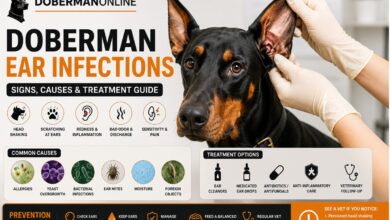
Doberman Allergies: Symptoms, Causes & Treatment Guide

Doberman Allergies: Symptoms, Causes & Treatment Guide
Dobermans are known for their sleek coats and athletic appearance, but many owners are surprised to discover that this breed can be prone to various allergic conditions. Allergies may affect the skin, ears, digestive system, or respiratory tract, causing discomfort that ranges from mild itching to chronic inflammation and recurrent infections.
Because allergy symptoms often develop gradually, many owners mistake them for seasonal shedding or dry skin. Early recognition and proper veterinary care can significantly improve a Doberman’s comfort and quality of life.

What Are Allergies in Dobermans?
An allergy occurs when the immune system overreacts to a substance that is normally harmless.
These substances, known as allergens, may include:
- Pollen
- Dust mites
- Mold spores
- Grass
- Certain proteins in food
- Flea saliva
- Household cleaning products
Instead of ignoring these triggers, the immune system produces an inflammatory response that leads to itching, redness, and irritation.
Common Types of Allergies
Environmental Allergies (Atopy)
Environmental allergies are among the most common chronic skin conditions seen in Dobermans.
Triggers may include:
- Tree pollen
- Grass pollen
- Dust
- Mold
- Weeds
Symptoms often become worse during certain seasons but may eventually occur throughout the entire year.
Food Allergies
Food allergies are less common than many owners believe but can produce persistent symptoms.
Common dietary triggers include:
- Beef
- Chicken
- Dairy products
- Eggs
- Wheat
- Soy
Unlike seasonal allergies, food allergies usually cause year-round symptoms.
Flea Allergy Dermatitis
Some Dobermans develop an intense allergic reaction to flea saliva.
Even a single flea bite can trigger:
- Severe itching
- Hair loss
- Red skin
- Secondary infections
Consistent parasite prevention is essential.
Symptoms of Doberman Allergies
Signs vary depending on the type of allergy but commonly include:
- Constant scratching
- Excessive licking of paws
- Red or inflamed skin
- Hair loss
- Chronic ear infections
- Face rubbing
- Hot spots
- Dry or flaky skin
- Recurrent skin infections
Digestive symptoms may also occur with food allergies.
Why Are Dobermans Prone to Skin Problems?
Dobermans have a short coat that offers little protection against environmental irritants.
Their skin barrier may become damaged by repeated scratching, allowing bacteria and yeast to multiply.
Owners who notice unusual bumps, hair loss, or changes in skin color should also be familiar with Doberman Skin Lumps and Color Dilution Alopecia Guide, since several skin conditions can appear similar during the early stages.
How Veterinarians Diagnose Allergies
There is no single test that confirms every allergy.
Diagnosis usually includes:
- Physical examination
- Medical history
- Flea evaluation
- Skin cytology
- Elimination diet trial
- Blood or intradermal allergy testing when appropriate
Many skin diseases mimic allergies, making professional evaluation important.
Treatment Options
Treatment depends on the underlying cause.
Veterinarians may recommend:
- Prescription anti-itch medication
- Allergy immunotherapy
- Medicated shampoos
- Omega-3 fatty acids
- Antibiotics for secondary infections
- Strict flea prevention
Most allergic Dobermans require long-term management rather than a permanent cure.
Nutrition and Skin Health
Healthy skin begins with proper nutrition.
A balanced diet rich in essential fatty acids supports the skin barrier and may reduce inflammation.
Owners considering dietary changes should choose complete and balanced nutrition rather than switching foods repeatedly without veterinary guidance. Nutritional recommendations for maintaining healthy skin and coat are discussed in Best Dog Food for Dobermans: A Complete Nutrition Guide for Every Life Stage.
Can Allergies Be Prevented?
Not every allergy can be prevented, but owners can reduce flare-ups by:
- Maintaining regular flea prevention
- Cleaning bedding frequently
- Vacuuming carpets
- Wiping paws after walks
- Feeding a consistent diet
- Scheduling regular veterinary checkups
Early intervention often prevents minor irritation from becoming chronic skin disease.
When Should You See a Veterinarian?
A veterinary examination is recommended if your Doberman develops:
- Persistent itching
- Recurrent ear infections
- Hair loss
- Skin odor
- Open sores
- Swollen paws
- Continuous licking or chewing
Prompt treatment helps reduce discomfort and lowers the risk of secondary bacterial or yeast infections.
Frequently Asked Questions
What are the most common allergies in Dobermans?
Environmental allergies, food allergies, and flea allergy dermatitis are the most frequently diagnosed allergic conditions in Dobermans.
How do I know if my Doberman has a food allergy?
Year-round itching, chronic ear infections, and digestive problems may suggest a food allergy, although an elimination diet supervised by a veterinarian is usually needed for diagnosis.
Can Doberman allergies be cured?
Most allergies cannot be permanently cured, but they can usually be managed successfully with medication, nutrition, environmental control, and regular veterinary care.
Why does my Doberman keep licking its paws?
Excessive paw licking is one of the most common signs of environmental allergies and skin irritation.
Can allergies cause hair loss in Dobermans?
Yes. Chronic scratching and inflammation may lead to thinning hair, bald patches, and secondary skin infections.