Doberman Dilated Cardiomyopathy (DCM): Symptoms, Testing, Treatment & Life Expectancy

Doberman Dilated Cardiomyopathy (DCM): Symptoms, Testing, and Life Expectancy
Dilated Cardiomyopathy (DCM) is one of the most serious and common health conditions affecting Dobermans. In fact, heart disease is considered the leading cause of death in the breed, and Dilated Cardiomyopathy is responsible for a large percentage of those cases.
The challenge with Doberman Dilated Cardiomyopathy is that many dogs show no obvious symptoms during the early stages of the disease. A seemingly healthy Doberman may develop severe heart failure or even experience sudden cardiac death without warning.
Understanding the symptoms, diagnostic tests, treatment options, and expected life expectancy can help owners detect the condition earlier and provide the best possible care for their dogs.
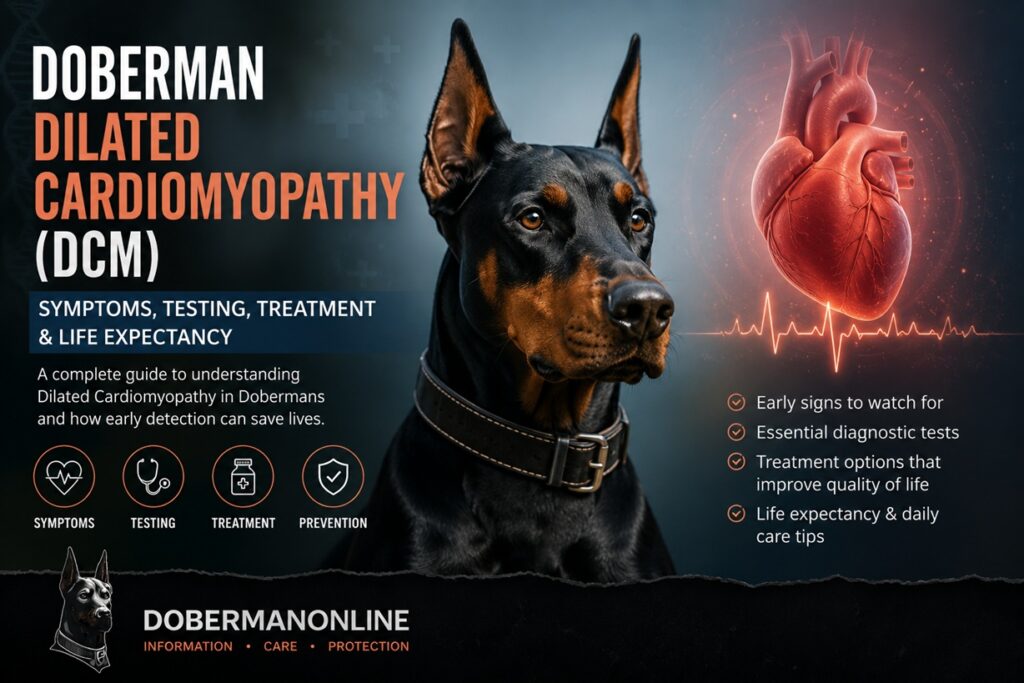
What Is Doberman Dilated Cardiomyopathy (DCM)?
Dilated Cardiomyopathy is a progressive heart disease that causes the heart muscle to weaken and enlarge. As the heart chambers stretch and become thinner, the heart loses its ability to pump blood efficiently throughout the body.
Over time, this reduced pumping ability leads to poor circulation, fluid buildup, irregular heart rhythms, and eventually congestive heart failure.
Dobermans have a strong genetic predisposition to DCM, making them one of the highest-risk breeds in the world for this condition.
Why Are Dobermans So Prone to DCM?
Research suggests that genetics play a major role in the development of Dilated Cardiomyopathy in Dobermans.
Several genetic mutations have been linked to the disease, although not every affected dog carries the same mutations. This indicates that DCM is likely influenced by multiple genes as well as environmental factors.
Risk factors include:
- Family history of DCM
- Increasing age
- Genetic mutations associated with heart disease
- Male sex (males often develop more severe disease)
- Existing heart rhythm abnormalities
Because of the breed’s high risk, routine cardiac screening is strongly recommended even for apparently healthy Dobermans.
Stages of Doberman DCM
Understanding the progression of the disease helps owners recognize its seriousness.
Stage 1: Occult DCM
This is the hidden stage.
The dog appears completely healthy and may show no signs of illness. However, subtle changes are already occurring within the heart.
Many Dobermans remain in this stage for months or even years before symptoms become noticeable.
Stage 2: Electrical Abnormalities
Abnormal heart rhythms begin to develop.
Dogs may experience:
- Occasional weakness
- Reduced exercise tolerance
- Brief collapse episodes
- Irregular heartbeat
Some dogs still appear normal despite significant electrical disturbances.
Stage 3: Clinical DCM
Heart function deteriorates significantly.
Common symptoms include:
- Persistent coughing
- Difficulty breathing
- Fatigue
- Weight loss
- Reduced appetite
- Exercise intolerance
- Fluid accumulation in the lungs
At this stage, veterinary intervention becomes critical.
Stage 4: Congestive Heart Failure
The heart can no longer effectively support the body’s circulation.
Symptoms may include:
- Severe breathing difficulty
- Swollen abdomen
- Extreme weakness
- Frequent collapse
- Bluish gums
- Emergency medical distress
This stage is life-threatening and requires immediate veterinary care.
Early Symptoms of Doberman DCM
One of the most dangerous aspects of Dilated Cardiomyopathy is that symptoms often appear late in the disease process.
Early warning signs may include:
- Tiring more quickly during walks
- Reduced enthusiasm for exercise
- Increased sleeping
- Occasional weakness
- Brief fainting episodes
- Mild coughing
- Irregular heartbeat
Because these symptoms can be subtle, many owners mistake them for normal aging.
Advanced Symptoms
As heart function declines, symptoms become more obvious.
Advanced signs include:
- Rapid breathing
- Difficulty breathing while resting
- Frequent coughing
- Collapse episodes
- Significant weakness
- Weight loss
- Loss of appetite
- Distended abdomen
- Sudden death
Any Doberman showing these signs should be evaluated by a veterinarian immediately.
How Is DCM Diagnosed?
Early diagnosis significantly improves management options.
Veterinarians typically use several tests to detect Doberman Dilated Cardiomyopathy.
Echocardiogram
An echocardiogram is considered the gold standard for diagnosing DCM.
This ultrasound examination allows veterinarians to evaluate:
- Heart chamber size
- Pumping strength
- Valve function
- Overall cardiac performance
Holter Monitor
A Holter monitor records heart activity continuously for 24 hours.
This test is especially valuable because many Dobermans develop dangerous arrhythmias before structural heart changes become visible.
Electrocardiogram (ECG)
An ECG measures electrical activity within the heart and helps identify rhythm abnormalities.
Chest X-Rays
Radiographs can reveal:
- Enlarged heart size
- Fluid accumulation in the lungs
- Signs of congestive heart failure
Genetic Testing
Genetic testing may identify certain mutations associated with DCM risk.
However, a negative genetic test does not guarantee that a Doberman will never develop the disease.
For this reason, regular cardiac screening remains essential.
Treatment for Doberman Dilated Cardiomyopathy
Unfortunately, there is currently no cure for Dilated Cardiomyopathy. However, early diagnosis and proper treatment can slow disease progression, improve quality of life, and extend survival time.
Maintaining a healthy body weight and monitoring overall health are important parts of long-term disease management. Owners should also be familiar with other life-threatening emergencies such as gastric dilatation-volvulus (GDV), commonly known as bloat
Treatment plans vary depending on the stage of the disease and the severity of symptoms.
Pimobendan
Pimobendan is one of the most commonly prescribed medications for Dobermans diagnosed with DCM.
Benefits include:
- Improved heart pumping efficiency
- Better circulation
- Delayed onset of congestive heart failure
- Improved quality of life
Many studies have shown that dogs diagnosed in the occult stage often benefit significantly from early Pimobendan therapy.
Anti-Arrhythmia Medications
Dogs with dangerous heart rhythm abnormalities may require medications such as:
- Sotalol
- Mexiletine
- Atenolol
These drugs help reduce the risk of life-threatening arrhythmias and sudden cardiac death.
ACE Inhibitors
Veterinarians may prescribe medications such as:
- Enalapril
- Benazepril
These medications reduce the workload on the heart and help support circulation.
Diuretics
When congestive heart failure develops, excess fluid may accumulate in the lungs or abdomen.
Diuretics such as Furosemide help remove excess fluid and improve breathing comfort.
Dietary Management
Nutrition plays an important supportive role.
Many veterinarians recommend:
- Maintaining a healthy body weight
- Avoiding obesity
- High-quality protein sources
- Controlled sodium intake when heart failure develops
- Omega-3 fatty acid supplementation when appropriate
Owners should always discuss dietary changes with their veterinarian before making major adjustments.
Can Doberman DCM Be Prevented?
Because genetics are heavily involved, DCM cannot be completely prevented.
However, responsible management can improve outcomes and increase the chances of early detection.
Recommended preventive measures include:
Annual Cardiac Screening
Routine heart testing is the single most important preventive strategy.
Most cardiologists recommend screening beginning around 2 to 3 years of age.
Annual screening often includes:
- Echocardiogram
- Holter monitoring
- Physical examination
Responsible Breeding
Breeders should screen breeding dogs for DCM before producing litters.
Dogs diagnosed with DCM should never be used for breeding.
Maintain a Healthy Lifestyle
Although lifestyle cannot eliminate genetic risk, owners should focus on:
- Regular exercise
- Healthy weight maintenance
- Balanced nutrition
- Routine veterinary care
Monitor for Subtle Changes
Small behavioral changes may be the first sign of heart disease.
Owners should pay attention to:
- Reduced stamina
- Increased sleeping
- Changes in breathing
- Fainting episodes
- Persistent coughing
Early recognition often leads to earlier diagnosis.
Doberman DCM Screening Schedule
Many veterinary cardiologists recommend the following schedule:
Ages 1–2 Years
- Baseline cardiac examination
- Discuss family history with veterinarian
Ages 2–4 Years
- Annual echocardiogram
- Annual Holter monitor
Ages 4–7 Years
- Cardiac screening every 6–12 months
- Increased monitoring for arrhythmias
Ages 7+ Years
- More frequent evaluations
- Immediate testing if symptoms develop
Because DCM can appear at almost any age, regular screening should continue throughout the dog’s life.
Life Expectancy of a Doberman with DCM
Life expectancy varies greatly depending on how early the disease is detected.
Occult Stage Diagnosis
Dogs diagnosed before symptoms appear often have the best outcomes.
With appropriate monitoring and treatment, some Dobermans may live several years after diagnosis.
Symptomatic DCM
Once clinical signs develop, prognosis becomes more guarded.
Many dogs live from several months to a few years depending on:
- Severity of heart damage
- Presence of arrhythmias
- Response to treatment
- Overall health status
Congestive Heart Failure
When congestive heart failure develops, survival times are generally shorter.
However, modern medications can still provide meaningful improvements in comfort and quality of life.
Sudden Death and Doberman DCM
One of the most devastating aspects of DCM is the risk of sudden cardiac death.
Some Dobermans may show little or no warning before experiencing a fatal arrhythmia.
Risk factors for sudden death include:
- Ventricular arrhythmias
- Advanced disease
- Severe electrical instability
- Lack of regular screening
This is one reason why Holter monitoring is considered so important in the breed.
When Should You Contact a Veterinarian?
Seek veterinary attention immediately if your Doberman experiences:
- Fainting episodes
- Difficulty breathing
- Persistent coughing
- Sudden weakness
- Collapse
- Rapid breathing at rest
- Blue or pale gums
Prompt evaluation may be life-saving.
Living with a Doberman Diagnosed with DCM
A diagnosis of Dilated Cardiomyopathy can be frightening, but many Dobermans continue to enjoy a good quality of life for months or years after diagnosis.
Owners can help by:
- Following medication schedules precisely
- Attending regular cardiac evaluations
- Monitoring breathing rates at home
- Maintaining a healthy body condition
- Avoiding excessive physical stress
- Reporting any changes to their veterinarian immediately
Consistent care and early intervention remain the best tools for managing this disease.
Conclusion
Doberman Dilated Cardiomyopathy (DCM) is one of the most serious health conditions affecting the breed. Because symptoms often appear late in the disease process, routine cardiac screening is essential for early detection.
Annual echocardiograms, Holter monitoring, and regular veterinary evaluations can identify heart abnormalities before obvious symptoms develop. While there is no cure for DCM, modern medications and proactive management can significantly improve both quality of life and survival time.
Every Doberman owner should understand the warning signs of heart disease and prioritize lifelong cardiac screening. Early diagnosis remains the most powerful tool for protecting the health and longevity of this remarkable breed.
Frequently Asked Questions (FAQ)
What is Doberman Dilated Cardiomyopathy (DCM)?
Doberman Dilated Cardiomyopathy is a progressive heart disease that weakens the heart muscle and reduces its ability to pump blood effectively throughout the body.
How common is DCM in Dobermans?
DCM is extremely common in the breed. Research suggests that a significant percentage of Dobermans may develop some form of the disease during their lifetime.
What are the first signs of DCM in Dobermans?
Early signs often include reduced stamina, increased sleeping, occasional weakness, fainting episodes, and decreased interest in exercise.
Can a Doberman live with DCM?
Yes. Many Dobermans live months or even years after diagnosis with proper veterinary care, medication, and regular monitoring.
Is DCM inherited in Dobermans?
Genetics play a major role. Dogs with a family history of DCM are at increased risk of developing the disease.
What is the best test for DCM?
An echocardiogram combined with a 24-hour Holter monitor is considered the most effective screening approach.
Can DCM be cured?
No. There is currently no cure for Dilated Cardiomyopathy, but treatment can slow progression and improve quality of life.
At what age should Dobermans be screened for DCM?
Most experts recommend beginning annual cardiac screening between 2 and 3 years of age.
Can exercise cause DCM?
No. Exercise does not cause DCM, although dogs with advanced disease may require activity restrictions.
What is the average life expectancy of a Doberman with DCM?
Life expectancy varies widely depending on disease stage and treatment response. Early diagnosis generally results in a better prognosis.
 YouTube: DobermanOnline