Doberman Puppy Vaccination Schedule: A Complete Guide From 8 Weeks to 16 Months

Doberman Puppy Vaccination Schedule: A Complete Guide From 8 Weeks to 16 Months
Bringing home a Doberman puppy is an exciting experience, but it also comes with important responsibilities. One of the most critical aspects of raising a healthy puppy is following an appropriate vaccination schedule.
Dobermans are active, intelligent dogs that are naturally curious about their environment. During the first months of life, their immune system is still developing, making them vulnerable to several serious infectious diseases. Vaccinations help protect puppies during this high-risk period and significantly reduce the likelihood of life-threatening illnesses.
Understanding when each vaccine should be given can help owners make informed decisions and ensure their puppy receives timely protection.
Why Vaccinations Are Important for Doberman Puppies
Puppies receive temporary antibodies from their mother’s milk during the first weeks of life. These maternal antibodies provide early protection but gradually decline as the puppy grows.
The challenge is that maternal antibodies can also interfere with vaccines. This is why puppies require a series of vaccinations rather than a single injection. Multiple doses help ensure the puppy develops lasting immunity once maternal antibodies disappear.
Without proper vaccination, puppies remain susceptible to diseases such as:
- Canine Parvovirus
- Canine Distemper
- Canine Adenovirus (Hepatitis)
- Rabies
- Leptospirosis
- Bordetella (Kennel Cough)
- Canine Influenza
Many of these diseases can be fatal, especially in young puppies.
Doberman Puppy Vaccination Schedule
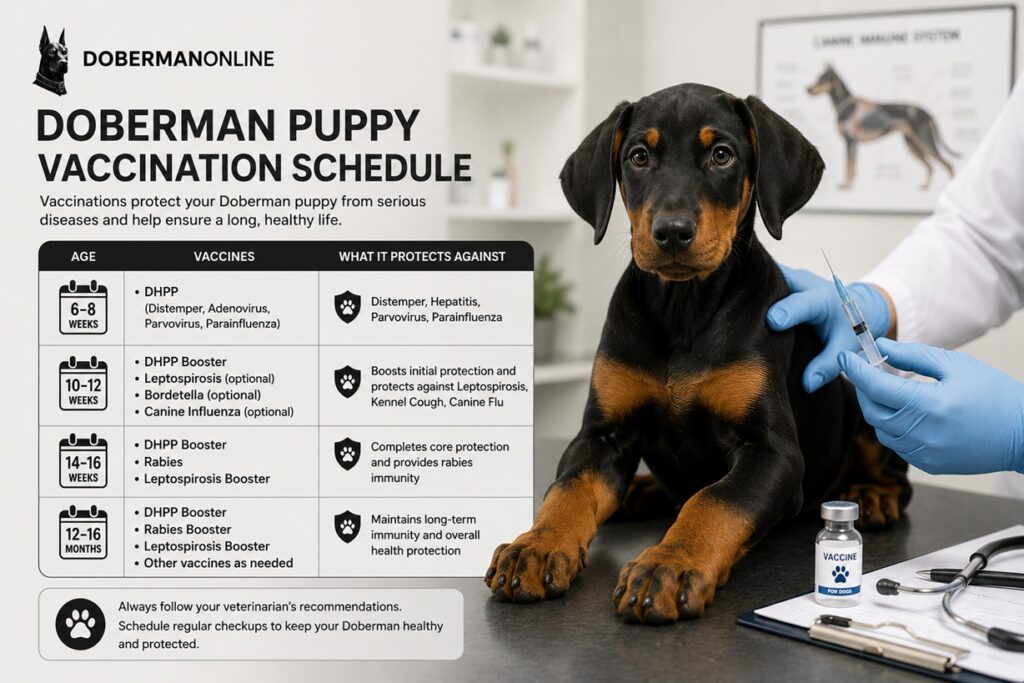
The exact schedule may vary depending on local regulations, disease prevalence, and your veterinarian’s recommendations. However, most Doberman puppies follow a vaccination timeline similar to the one below.
6–8 Weeks of Age
At this stage, puppies typically receive their first core vaccination.
Common vaccines include:
- Distemper
- Adenovirus (Hepatitis)
- Parvovirus
- Parainfluenza
These are often combined into a single vaccine commonly referred to as DHPP.
Many breeders administer the first vaccine before puppies go to their new homes.
10–12 Weeks of Age
The second DHPP booster is usually given during this period.
Depending on geographic location and lifestyle, your veterinarian may also recommend:
- Leptospirosis vaccine
- Bordetella vaccine
- Canine Influenza vaccine
Puppies that will attend training classes, dog daycare, grooming facilities, or boarding kennels may benefit from additional protection against respiratory diseases.
14–16 Weeks of Age
This visit is particularly important because it helps establish long-term immunity.
Vaccines commonly administered include:
- Final DHPP booster
- Rabies vaccine
- Leptospirosis booster (if required)
By approximately 16 weeks of age, most puppies have completed their initial core vaccine series.
12–16 Months of Age
A booster appointment is generally recommended around one year after the puppy series is completed.
This visit may include:
- DHPP booster
- Rabies booster
- Leptospirosis booster
- Other lifestyle-based vaccines
After this stage, future boosters are typically administered according to veterinary guidelines and local regulations.
Core Vaccines for Doberman Puppies
Core vaccines are considered essential for virtually all puppies regardless of lifestyle.
Canine Distemper Virus
Distemper is a highly contagious viral disease that affects the respiratory, gastrointestinal, and nervous systems.
Symptoms may include:
- Fever
- Nasal discharge
- Coughing
- Vomiting
- Neurological abnormalities
The disease can cause permanent damage or death in severe cases.
Canine Parvovirus
Parvovirus is one of the most feared diseases among puppy owners.
It attacks rapidly dividing cells in the intestines and bone marrow, causing:
- Severe vomiting
- Bloody diarrhea
- Dehydration
- Septic complications
Young Doberman puppies can become critically ill within a short period of time if infected.
Canine Adenovirus
Adenovirus is associated with infectious canine hepatitis.
The disease may affect:
- Liver function
- Kidneys
- Eyes
- Blood vessels
Vaccination provides highly effective protection.
Rabies
Rabies is a fatal viral disease that affects the nervous system and can be transmitted to humans.
Vaccination requirements vary by country and region, but rabies immunization is legally required in many areas.
Non-Core Vaccines Your Veterinarian May Recommend
Not every Doberman puppy requires every vaccine.
Recommendations depend on factors such as:
- Geographic location
- Exposure risk
- Travel habits
- Boarding requirements
- Local disease prevalence
Common non-core vaccines include:
Leptospirosis
Leptospirosis is a bacterial disease that can affect both dogs and humans.
Dogs may become infected through:
- Standing water
- Wildlife urine contamination
- Outdoor environments
Because Dobermans are often active outdoor companions, veterinarians frequently recommend this vaccine.
Bordetella
Bordetella is one of the primary causes of kennel cough.
Vaccination may be recommended for puppies that:
- Attend daycare
- Visit dog parks
- Participate in training classes
- Stay in boarding facilities
Canine Influenza
Canine flu outbreaks occur periodically in some regions.
Dogs that frequently interact with other dogs may benefit from vaccination.
Can a Doberman Puppy Go Outside Before Vaccinations Are Complete?
This is one of the most common questions new owners ask.
Puppies can safely explore controlled environments before completing their vaccine series, but exposure should be limited.
Avoid:
- Dog parks
- Pet store floors
- High-traffic public dog areas
- Unknown dogs with uncertain vaccination status
Safe socialization opportunities include:
- Carrying your puppy in public places
- Meeting healthy vaccinated dogs
- Visiting friends’ homes
- Observing new sights and sounds
Proper socialization remains extremely important during the critical developmental window between 8 and 16 weeks of age.
Vaccine Side Effects in Doberman Puppies
Most puppies experience little to no discomfort after vaccination.
Mild reactions may include:
- Temporary tiredness
- Mild soreness at the injection site
- Reduced appetite for 24 hours
- Slight swelling
These signs usually resolve within one or two days.
Contact your veterinarian immediately if you notice:
- Facial swelling
- Difficulty breathing
- Severe vomiting
- Collapse
- Persistent lethargy
Serious vaccine reactions are uncommon but require prompt medical attention.
Keeping Accurate Vaccination Records
Every Doberman owner should maintain a copy of their puppy’s vaccination history.
These records are often required for:
- Training classes
- Boarding facilities
- Grooming appointments
- Travel documentation
- Veterinary referrals
Keeping records organized can prevent missed boosters and ensure continuous protection throughout your dog’s life.
Puppies grow rapidly during their first year, and vaccine timing often overlaps with important developmental milestones. Owners who want to track their puppy’s physical development can also review our Doberman Puppy Growth Chart: Weight & Height Guide by Age for a detailed breakdown of expected growth stages.
Proper nutrition plays a major role in supporting the immune system during the vaccination period. If you’re unsure what to feed your puppy at different ages, see our How to Feed a Doberman Puppy: A Complete Growth Guide for practical feeding recommendations.
Frequently Asked Questions
At what age should a Doberman puppy receive its first vaccine?
Most puppies receive their first vaccination between 6 and 8 weeks of age.
When is a Doberman puppy fully vaccinated?
Most puppies are considered adequately protected approximately one to two weeks after their final puppy vaccine, usually around 16 weeks of age.
Do indoor Doberman puppies still need vaccines?
Yes. Even puppies that spend most of their time indoors can be exposed to infectious diseases through people, contaminated surfaces, or other animals.
Is the rabies vaccine required for Doberman puppies?
In many countries and regions, rabies vaccination is legally required. Your veterinarian can explain local requirements.
Can vaccinations cause illness in puppies?
Mild side effects are common, but serious reactions are rare. Most puppies recover quickly and experience no significant problems.