Doberman Colors Explained: Black, Red, Blue & Fawn (Genetics, Health & AKC Standards)

Doberman Colors Explained: Black, Red, Blue & Fawn (Genetics, Health & AKC Standards)
Few dog breeds are as instantly recognizable as the Doberman Pinscher. Their sleek, muscular build and short, glossy coat create an elegant appearance that has made the breed popular around the world. While many people picture a black-and-rust Doberman, the breed actually comes in several officially recognized colors, each with its own unique appearance and genetic background.
Color is often one of the first things future owners notice when choosing a puppy, but it should never be the only factor. A Doberman’s temperament, health, and the quality of its breeding are far more important than coat color alone. Understanding how coat colors are inherited can also help owners make informed decisions and avoid common myths surrounding rare or unusual-colored dogs.
In this guide, you’ll learn about every officially recognized Doberman color, how coat color genetics work, which colors are considered rare, whether color affects health or temperament, and what breed organizations such as the American Kennel Club (AKC) recognize.
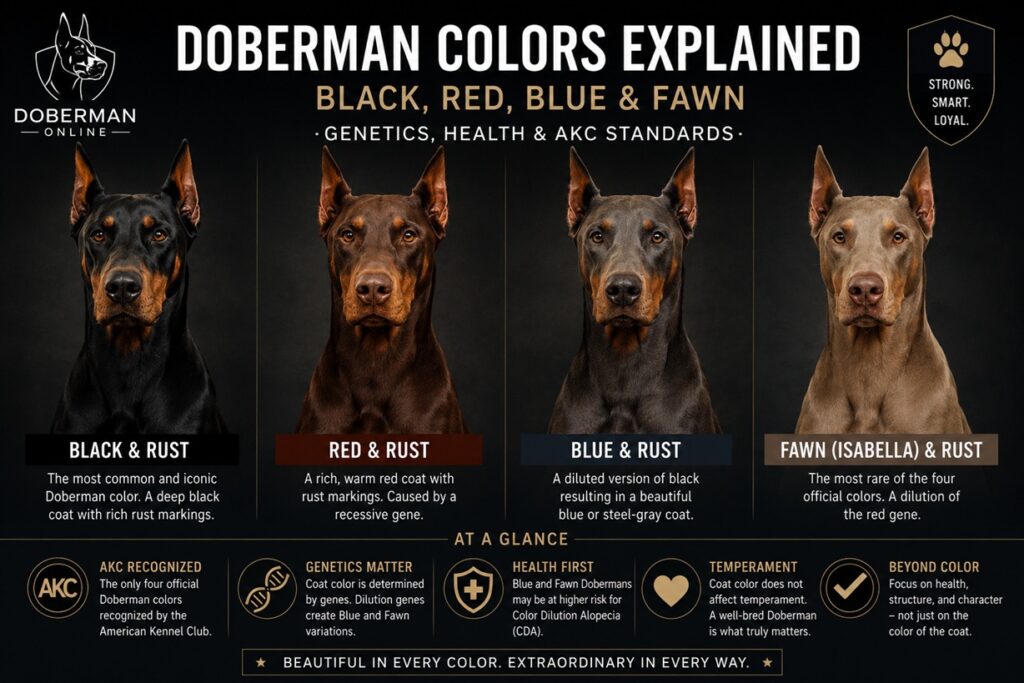
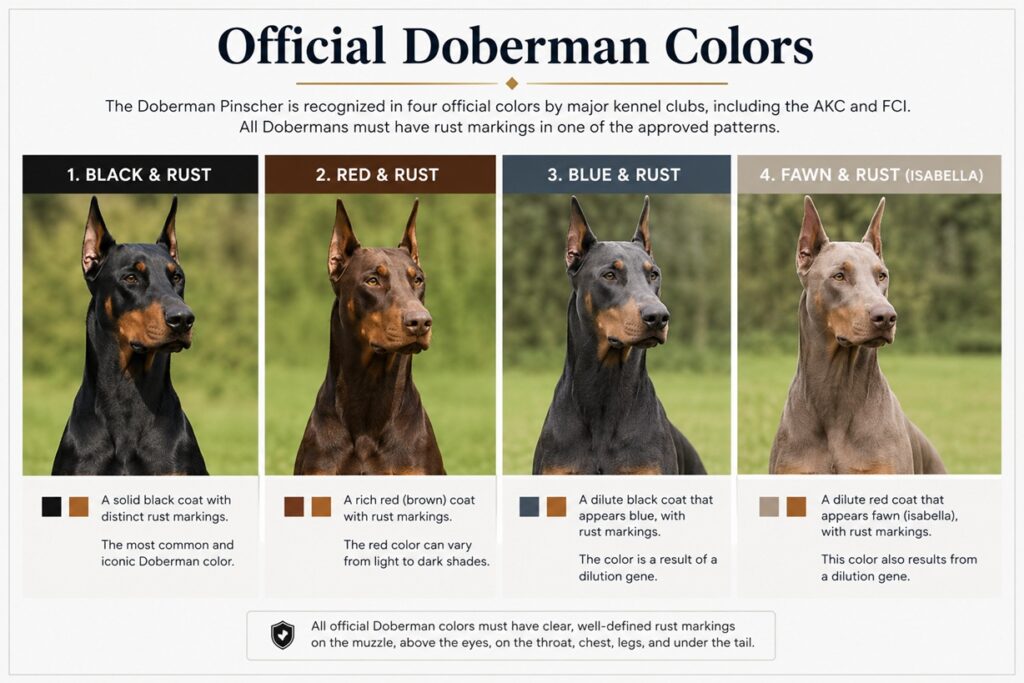
Official Doberman Colors
According to the American Kennel Club (AKC), there are four officially recognized Doberman coat colors:
| Color | AKC Recognized | Rarity |
|---|---|---|
| Black & Rust | ✅ Yes | Most Common |
| Red & Rust | ✅ Yes | Common |
| Blue & Rust | ✅ Yes | Less Common |
| Fawn (Isabella) & Rust | ✅ Yes | Rare |
Every purebred Doberman also has clearly defined rust markings above the eyes, on the muzzle, chest, legs, and beneath the tail. These markings are part of the breed standard and help create the distinctive appearance Dobermans are known for.
Although other colors occasionally appear, they are generally the result of genetic mutations and are not accepted by major kennel clubs.
Black Doberman
The Black and Rust Doberman is by far the most recognizable and popular color variation. This is the color most people imagine when they think of the breed.
A healthy black Doberman has a deep jet-black coat with sharply defined rust markings. The short coat reflects light beautifully, giving the dog its signature glossy appearance.
Because black is the dominant coat color gene, this variation is also the most commonly produced by responsible breeders.
Owners often choose black Dobermans simply because they match the classic image of the breed, but there is no evidence that black Dobermans are more intelligent, more protective, or easier to train than Dobermans of other recognized colors.
Red Doberman
Often called the brown or chocolate Doberman, the Red and Rust variation carries a recessive gene that changes the black pigment into a rich reddish-brown color.
In bright sunlight, the coat often appears mahogany or copper, giving these dogs a warm and elegant look.
Like black Dobermans, healthy red Dobermans have well-defined rust markings and the same athletic body structure, intelligence, and working ability.
Many owners appreciate this color because it is slightly less common while still fully recognized by the AKC and other major kennel clubs.
There is no scientific evidence that red Dobermans have a different temperament than black Dobermans.
Blue Doberman
Blue Dobermans are sometimes mistaken for gray dogs, but their coat is actually a diluted version of black.
The dilution gene reduces the intensity of the black pigment, producing a beautiful steel-blue or charcoal appearance.
Although striking in appearance, Blue Dobermans are more likely to develop Color Dilution Alopecia (CDA), a hereditary skin condition that may cause:
- Thinning hair
- Patchy hair loss
- Dry skin
- Increased skin sensitivity
- Recurrent skin infections
Not every Blue Doberman develops CDA, but prospective owners should understand the increased risk before choosing this color.
Responsible breeders never prioritize color over health testing.
Fawn (Isabella) Doberman
The Fawn Doberman, sometimes called the Isabella Doberman, is the rarest of the four officially recognized coat colors. This color is produced when a puppy inherits two dilution genes, resulting in a light beige or silvery-brown coat.
In sunlight, the coat may appear almost metallic, making Fawn Dobermans especially eye-catching.
Like Blue Dobermans, Fawn Dobermans have an increased risk of developing Color Dilution Alopecia (CDA). The condition affects the hair follicles rather than the dog’s overall health, but it can lead to chronic skin problems that require lifelong management.
Potential symptoms include:
- Thin or sparse coat
- Dry, flaky skin
- Hair breakage
- Recurrent skin infections
- Increased sensitivity to sunlight
Because of these risks, responsible breeders focus on health testing and temperament instead of producing rare colors.
White Dobermans and Albinism
White Dobermans often attract attention because of their unusual appearance, but they are not an officially recognized color.
The first known white Doberman appeared in the United States during the 1970s. Most white Dobermans today descend from that original dog, meaning they have an extremely limited genetic pool.
Despite being marketed as “rare” or “special,” white Dobermans are actually affected by a form of albinism that reduces pigment throughout the body.
Common health concerns include:
- Extreme sensitivity to sunlight
- Vision problems
- Increased risk of skin damage
- Light-sensitive eyes
- Greater chance of developing certain skin conditions
For these reasons, organizations such as the Doberman Pinscher Club of America discourage breeding albino Dobermans.
If you see a breeder charging significantly more for a white Doberman simply because it is rare, that should be considered a warning sign.
Doberman Coat Color Genetics
Every Doberman inherits one color gene from each parent.
Without becoming overly technical, two genes determine the coat colors most owners see.
The Color Gene
This gene determines whether a Doberman will be:
- Black
- Red
Black is dominant, while red is recessive.
The Dilution Gene
A second gene determines whether the coat pigment is diluted.
When dilution is present:
- Black becomes Blue.
- Red becomes Fawn (Isabella).
This simple combination creates the four recognized Doberman colors.
| Base Color | Dilution | Result |
|---|---|---|
| Black | No | Black & Rust |
| Red | No | Red & Rust |
| Black | Yes | Blue & Rust |
| Red | Yes | Fawn & Rust |
This is why Blue and Fawn Dobermans are naturally less common.
Does Coat Color Affect Health?
In some cases, yes—but not in the way many people believe.
Black and Red Dobermans generally do not have health problems related to coat color alone.
Blue and Fawn Dobermans, however, are more likely to inherit Color Dilution Alopecia (CDA), which affects the coat and skin rather than internal organs.
Aside from this condition, all Dobermans share the same inherited risks for breed-specific diseases, including heart disease, bleeding disorders, and thyroid problems.
Choosing a breeder who performs comprehensive health testing is far more important than choosing a specific coat color.
Does Coat Color Affect Temperament?
One of the biggest myths about Dobermans is that certain colors are naturally more aggressive, calmer, smarter, or easier to train.
There is no scientific evidence supporting these claims.
A Doberman’s personality is shaped by factors such as:
- Genetics
- Early socialization
- Training
- Daily environment
- Owner experience
A well-bred Blue Doberman can be just as confident and obedient as a Black Doberman, while a poorly socialized dog of any color may develop behavioral problems.
When choosing a puppy, always prioritize the breeder’s reputation, health testing, and temperament over coat color.
Which Doberman Color Is the Rarest?
Among the four officially recognized colors, the general order is:
- Black & Rust
- Red & Rust
- Blue & Rust
- Fawn (Isabella) & Rust
Fawn Dobermans are the least common because they require two recessive dilution genes.
White Dobermans are even less common, but they are not considered an accepted breed color and should not be confused with naturally rare coat variations.
AKC Breed Standard
The American Kennel Club recognizes only four coat colors for Dobermans:
- Black & Rust
- Red & Rust
- Blue & Rust
- Fawn (Isabella) & Rust
Each color must have clearly defined rust markings located above the eyes, on the muzzle, throat, chest, legs, feet, and beneath the tail.
Dogs with missing markings or non-standard coat colors may not meet the official breed standard for conformation shows, although they can still make wonderful family companions.
Rather than focusing solely on appearance, responsible breeders strive to preserve the breed’s health, temperament, structure, and working ability.
Frequently Asked Questions
What are the official Doberman colors?
The American Kennel Club (AKC) officially recognizes four Doberman colors: Black & Rust, Red & Rust, Blue & Rust, and Fawn (Isabella) & Rust. Each color must have clearly defined rust markings to meet the breed standard.
What is the rarest Doberman color?
Fawn (Isabella) is the rarest of the four officially recognized Doberman colors. It is produced by a recessive dilution gene, making it much less common than Black or Red Dobermans.
Are Blue Dobermans healthy?
Blue Dobermans can be healthy dogs, but they have a higher risk of developing Color Dilution Alopecia (CDA), a genetic condition that affects the skin and coat. Not every Blue Doberman develops CDA, but owners should be aware of the possibility.
Do Doberman coat colors affect temperament?
No. There is no scientific evidence that coat color influences a Doberman’s personality, intelligence, or trainability. Temperament is shaped by genetics, responsible breeding, early socialization, and consistent training.
Are White Dobermans officially recognized?
No. White Dobermans are not recognized by the American Kennel Club as an official coat color. They are associated with albinism, which can increase the risk of vision problems, sun sensitivity, and certain skin conditions.
Which Doberman color is the most popular?
Black & Rust is the most common and widely recognized Doberman color. It is often considered the classic appearance of the breed and is the color most people associate with Dobermans.
Does coat color affect a Doberman’s health?
Most coat colors do not affect overall health. However, Blue and Fawn Dobermans are more likely to inherit Color Dilution Alopecia (CDA), which primarily affects the skin and hair rather than internal organs.
Should I choose a Doberman based on color?
Coat color should never be the main reason for choosing a Doberman. A responsible breeder, comprehensive health testing, stable temperament, and proper socialization are far more important than the dog’s color.