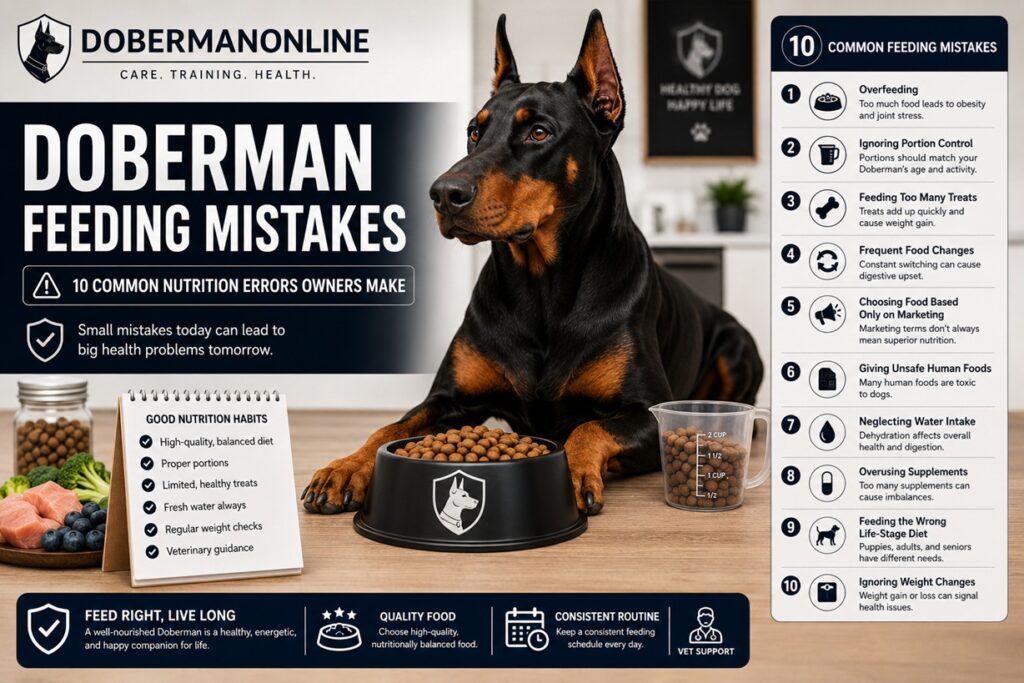
Doberman Feeding Mistakes: 10 Common Nutrition Errors Owners Make

Doberman Feeding Mistakes: 10 Common Nutrition Errors Owners Make
Even the most caring Doberman owners can make feeding mistakes that affect their dog’s health over time. Nutrition plays a critical role in maintaining healthy weight, supporting heart function, promoting joint health, and maximizing longevity.
Unfortunately, many common feeding habits are based on myths, outdated advice, or misinformation found online. Understanding these mistakes can help owners provide better nutrition and avoid preventable health problems.
Why Proper Nutrition Matters
Dobermans are a large, athletic breed with unique nutritional needs.
A balanced diet supports:
- Healthy muscle development
- Strong immune function
- Cardiovascular health
- Joint support
- Healthy skin and coat
- Proper weight management
Even small nutritional mistakes repeated daily can have long-term consequences.
Mistake #1: Overfeeding
Overfeeding is one of the most common mistakes among dog owners.
Many people assume a larger dog requires unlimited food, but excess calories often lead to:
- Obesity
- Joint stress
- Reduced mobility
- Increased risk of chronic disease
Owners should regularly monitor body condition rather than relying solely on feeding guidelines printed on dog food bags.
Mistake #2: Ignoring Portion Control
Feeding recommendations are only starting points.
Factors affecting calorie needs include:
- Age
- Activity level
- Metabolism
- Health status
An active working Doberman may require significantly more calories than a less active companion dog.
Mistake #3: Feeding Too Many Treats
Treats can quickly add hundreds of extra calories per day.
Many owners underestimate how much treats contribute to total calorie intake.
Treats should generally account for no more than 10% of daily calories.
Mistake #4: Frequent Food Changes
Constantly switching foods can create digestive upset and make it difficult to identify potential food sensitivities.
Gradual transitions over 7–10 days are usually recommended when changing diets.
Mistake #5: Choosing Food Based Only on Marketing
Terms such as:
- Premium
- Natural
- Holistic
- Gourmet
do not automatically indicate superior nutrition.
Owners should evaluate ingredient quality, nutritional adequacy, and manufacturer reputation rather than relying solely on marketing claims.
For a deeper understanding of selecting quality food, see Best Dog Food for Dobermans: A Complete Nutrition Guide for Every Life Stage. Many owners focus on advertising claims instead of nutritional quality. Understanding how to evaluate ingredients, protein sources, and life-stage formulas is far more important when selecting a diet. For a complete breakdown of recommended foods, see Best Dog Food for Dobermans: A Complete Nutrition Guide for Every Life Stage.
Mistake #6: Giving Unsafe Human Foods
Many human foods can be dangerous for dogs.
Examples include:
- Chocolate
- Grapes
- Raisins
- Onions
- Garlic
- Xylitol-containing products
Owners should understand which foods are toxic before offering table scraps.
Additional information can be found in What Can Dobermans Not Eat? Toxic Foods & Vet Nutrition Guide.
Mistake #7: Neglecting Water Intake
Nutrition is not only about food.
Fresh, clean water should always be available.
Dehydration can negatively affect:
- Digestion
- Kidney function
- Energy levels
- Overall health
Mistake #8: Overusing Supplements
Many owners assume supplements are always beneficial.
In reality, excessive supplementation may create nutritional imbalances or unnecessary expenses.
Supplements should complement—not replace—a balanced diet.
Mistake #9: Feeding an Inappropriate Life-Stage Diet
Nutritional requirements change throughout life.
A puppy, adult, and senior Doberman have different dietary needs.
Using the wrong life-stage formula may contribute to nutritional deficiencies or excesses.
Mistake #10: Ignoring Weight Changes
Weight gain and weight loss can signal underlying health issues.
Regular monitoring allows owners to identify problems before they become serious.
Maintaining a healthy body condition is often more important than achieving a specific number on the scale.
Frequently Asked Questions
What is the most common feeding mistake in Dobermans?
Overfeeding is one of the most common mistakes and a major contributor to obesity.
How many treats should a Doberman receive each day?
Treats should generally represent less than 10% of daily caloric intake.
Is it bad to switch dog food frequently?
Frequent food changes may cause digestive upset and make it harder to identify food sensitivities.
Can supplements replace quality dog food?
No. Supplements should support a balanced diet, not replace proper nutrition.
How do I know if my Doberman is overweight?
You should be able to feel the ribs without excessive fat covering, and your Doberman should have a visible waist when viewed from above.