What Is a Doberman? Ultimate Breed Guide & Characteristics

What Is a Doberman? Ultimate Breed Guide & Characteristics
The Doberman is one of the most recognizable and respected dog breeds in the world. Known for its intelligence, loyalty, athleticism, and protective instincts, the Doberman has earned a reputation as both an exceptional working dog and a devoted family companion.
Originally developed in Germany during the late 19th century, the breed was created to combine courage, intelligence, strength, and obedience. Today, Dobermans serve as family dogs, police dogs, military dogs, search-and-rescue dogs, and service animals across the globe.
Despite their intimidating appearance, well-bred and properly trained Dobermans are affectionate, people-oriented dogs that form strong bonds with their families. They thrive on companionship and often prefer being involved in every aspect of daily life. Their combination of intelligence, trainability, and loyalty has made them one of the most popular working breeds in the United States and around the world.
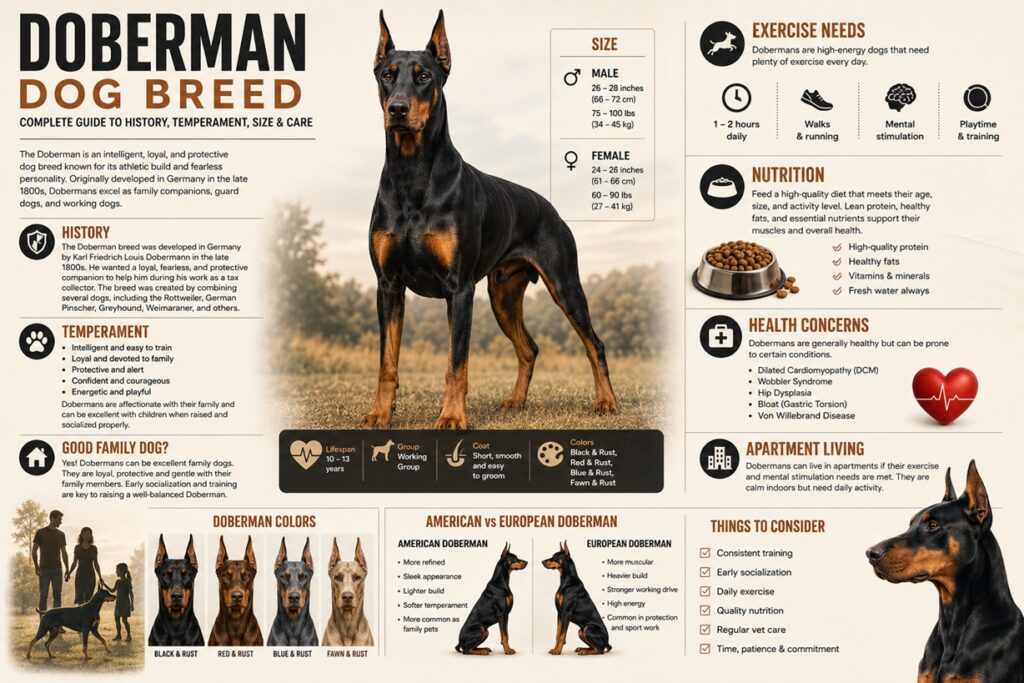
History of the Doberman
The Doberman breed was developed by Karl Friedrich Louis Dobermann, a German tax collector who wanted a loyal and protective companion to accompany him during his work. Because he frequently traveled through dangerous areas while carrying money, Dobermann sought to create a dog that was courageous, intelligent, and capable of protecting its owner when necessary.
Although no exact breeding records exist, experts believe the breed was developed using several dogs, including:
-
Rottweiler
-
German Pinscher
-
Weimaraner
-
Greyhound
-
Manchester Terrier
-
Early German Shepherd-type dogs
The result was a powerful and highly intelligent breed that quickly gained popularity throughout Germany before spreading to other parts of Europe and eventually the United States. Today, the Doberman is recognized by the American Kennel Club (AKC) as one of the world’s premier working breeds.
Why Are Dobermans So Popular?
Few dog breeds combine intelligence, athletic ability, loyalty, and protective instincts as successfully as the Doberman.
-
The Family Bond: One of the biggest reasons for the breed’s popularity is its strong bond with its family. Dobermans are known for becoming deeply attached to their owners and often follow them from room to room throughout the day.
-
Exceptional Trainability: Ranked among the most intelligent dog breeds, Dobermans learn commands quickly and excel in obedience training, protection sports, agility competitions, and advanced working roles.
-
Striking Appearance: A muscular body, elegant movement, and confident posture create a powerful presence that attracts many dog enthusiasts.
For active individuals and families, Dobermans can be excellent companions for hiking, running, outdoor adventures, and various canine sports.
Doberman Temperament
The Doberman is confident, alert, loyal, and highly intelligent. Modern Dobermans are generally much more stable and family-oriented than the aggressive stereotypes often portrayed in movies and media.
A well-socialized Doberman typically displays:
-
Confidence and Courage
-
Deep Loyalty
-
High Intelligence and Trainability
-
Affection toward family members
While naturally protective, Dobermans should not be unnecessarily aggressive. Proper breeding, training, and socialization play a major role in shaping a balanced temperament. Because they are highly people-focused dogs, Dobermans generally prefer being close to their families rather than spending long periods alone.
Are Dobermans Good Family Dogs?
Yes. A properly trained and socialized Doberman can be an outstanding family dog. Dobermans often develop strong relationships with children and are known for being both affectionate and protective toward family members. Their loyalty makes them highly attentive companions that naturally watch over their households.
However, like any large breed, interactions between dogs and young children should always be supervised. Families willing to invest time in training, exercise, and socialization often find the Doberman to be one of the most rewarding breeds to own.
Doberman Size and Physical Characteristics
The Doberman is a medium-to-large breed with a sleek and athletic appearance. The combination of a muscular build, deep chest, elegant movement, strong neck, short coat, and athletic physique allows Dobermans to excel in both working and sporting activities.
| Gender | Height Specification | Weight Specification |
| Male Doberman | 26–28 inches | 75–100 pounds |
| Female Doberman | 24–26 inches | 60–90 pounds |
Doberman Colors
The American Kennel Club recognizes four official Doberman colors:
-
Black and Rust: The most common and traditional color combination.
-
Red and Rust
-
Blue and Rust
-
Fawn (Isabella) and Rust
Less common colors such as blue and fawn are highly sought after by some owners but may be associated with specific coat-related health concerns. White or albino Dobermans are not recognized as standard colors and are often linked to genetic health issues.
American vs European Doberman
Although both belong to the same breed, American and European Dobermans have noticeable differences that prospective owners should consider:
American Doberman
-
Features a more refined appearance and leaner body structure.
-
Generally possesses a softer temperament.
-
Often preferred purely as a family companion.
European Doberman
-
Built on a larger frame with a more muscular build.
-
Possesses a stronger working drive.
-
Commonly used in protection sports and intensive working roles.
Neither type is inherently better; the ideal choice depends entirely on an owner’s goals and lifestyle.
Core Care and Maintenance Requirements
Exercise Requirements
Dobermans are energetic dogs that require daily physical and mental stimulation. Most adult Dobermans benefit from 1–2 hours of exercise daily, which should include structured walks, running sessions, interactive play, obedience training, and mental enrichment activities. Without sufficient exercise, boredom can lead to destructive behavior and excessive barking.
Nutrition and Feeding Needs
Proper nutrition plays a major role in maintaining a healthy Doberman. A balanced diet should include high-quality animal protein, healthy fats, essential vitamins and minerals, and joint-supporting nutrients when appropriate. Puppies, adults, and senior dogs all have different nutritional requirements, making age-appropriate feeding important throughout the dog’s life.
Common Doberman Health Problems
Like many purebred dogs, Dobermans can be predisposed to certain health conditions. Some of the most common include:
-
Dilated Cardiomyopathy (DCM)
-
Wobbler Syndrome
-
Hip Dysplasia
-
Gastric Dilatation-Volvulus (Bloat)
-
Von Willebrand Disease
Regular veterinary care, responsible breeding practices, and routine health screenings can help reduce risks and improve long-term health outcomes.
Can Dobermans Live in Apartments?
Contrary to popular belief, Dobermans can adapt to apartment living when their exercise needs are met. They are generally calm indoors after receiving adequate physical activity and mental stimulation.
Apartment owners should be prepared to provide daily walks, regular exercise sessions, training opportunities, and mental enrichment. The size of the home is often less important than the owner’s commitment to meeting the dog’s daily needs.
Things to Consider Before Getting a Doberman
Before bringing home a Doberman, potential owners should understand the breed’s requirements. Dobermans need consistent training, early socialization, daily exercise, human companionship, quality nutrition, and regular veterinary care.
They are best suited for owners who can dedicate time and attention to their physical and emotional well-being. For the right person, a Doberman can be one of the most loyal, intelligent, and rewarding companions a dog lover could ever own.
Frequently Asked Questions (FAQ)
What is a Doberman primarily known for?
The Doberman is known for its high intelligence, fierce loyalty, athletic build, and strong protective instincts, making them premier working dogs and family protectors.
Do male Dobermans grow larger than females?
Yes. Male Dobermans generally grow taller (26–28 inches) and heavier (75–100 pounds) compared to female Dobermans (24–26 inches and 60–90 pounds).
What are the main differences between American and European Dobermans?
American Dobermans are leaner, more refined, and have a softer temperament, making them ideal family pets. European Dobermans have a larger frame, more muscle, and a higher working drive, often preferred for protection sports.
Can Dobermans adapt well to apartment living?
Yes, as long as they receive 1–2 hours of vigorous daily exercise and mental stimulation outside, they are typically calm and quiet indoors.