Doberman Food Allergies: Symptoms, Causes & Best Diet Options

Doberman Food Allergies: Symptoms, Causes & Best Diet Options
Food allergies are a common concern among Doberman owners, especially when dogs develop chronic itching, recurring ear infections, digestive upset, or unexplained skin problems. While true food allergies are less common than environmental allergies, they can still significantly affect a Doberman’s comfort, health, and quality of life.
Identifying a food allergy can be frustrating because symptoms often resemble other medical conditions. Understanding the warning signs and learning how veterinarians diagnose food allergies can help owners make informed decisions about their dog’s diet.
What Is a Food Allergy?
A food allergy occurs when a dog’s immune system mistakenly identifies a specific ingredient as harmful.
When the Doberman eats that ingredient, the immune system triggers an inflammatory response that can affect the skin, ears, and digestive tract.
Food allergies differ from food intolerances.
A food intolerance typically causes digestive upset without involving the immune system, while a true food allergy creates an immune-mediated reaction.
Are Dobermans Prone to Food Allergies?
Dobermans can develop food allergies just like any other breed.
Food allergies may appear:
- During puppyhood
- In adulthood
- Even after years of eating the same diet
Many owners are surprised to learn that allergies often develop after prolonged exposure to a particular protein source rather than after introducing a completely new food.
Common Food Allergy Symptoms in Dobermans
Symptoms can vary from dog to dog.
The most common signs include:
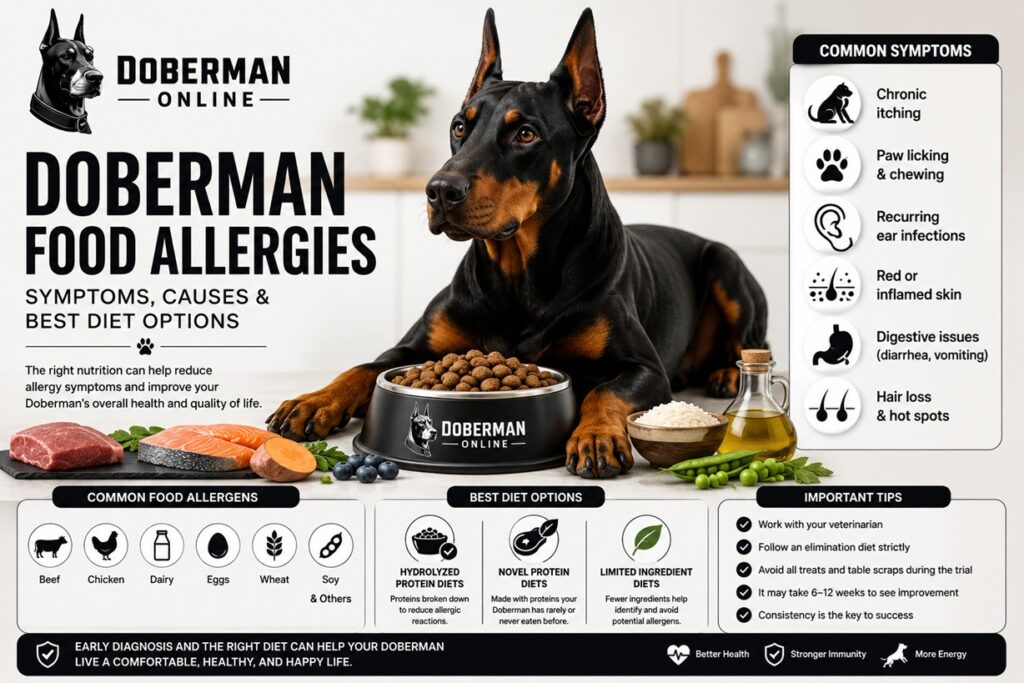
- Chronic itching
- Excessive paw licking
- Face rubbing
- Recurring ear infections
- Red or inflamed skin
- Hair loss
- Hot spots
- Chronic diarrhea
- Soft stools
- Vomiting
- Excessive gas
Unlike seasonal allergies, food allergy symptoms often remain present throughout the year.
Ear Infections and Food Allergies
Recurring ear infections are frequently associated with underlying allergies.
Inflammation caused by an allergic response can alter the ear environment and increase the risk of bacterial or yeast overgrowth. Dobermans that repeatedly suffer from ear problems may benefit from further evaluation, especially if symptoms continue despite treatment. Owners can learn more about this connection in Doberman Ear Infections: Signs, Causes & Treatment Guide.
Common Food Allergens in Dogs
Almost any ingredient can trigger an allergic reaction.
However, certain proteins are more commonly associated with food allergies.
Common allergens include:
- Beef
- Chicken
- Dairy products
- Eggs
- Wheat
- Soy
- Lamb
It is important to remember that these ingredients are not harmful for most dogs. Only dogs with a specific sensitivity need to avoid them.
How Veterinarians Diagnose Food Allergies
There is currently no blood test that can reliably diagnose food allergies in dogs.
The gold standard remains an elimination diet trial.
This process involves:
- Feeding a carefully selected diet.
- Avoiding all treats and flavored medications.
- Maintaining the diet for several weeks.
- Monitoring symptom improvement.
- Reintroducing ingredients under veterinary guidance.
Patience is essential because improvements may take several weeks to appear.
What Is an Elimination Diet?
An elimination diet uses ingredients the dog has never eaten before or a prescription hydrolyzed protein diet.
The goal is to remove potential allergens and observe whether symptoms improve.
Examples may include:
- Novel protein diets
- Hydrolyzed protein diets
- Veterinary therapeutic diets
Owners should avoid switching foods repeatedly during the testing period, as this can make interpretation difficult.
Best Diet Options for Dobermans With Food Allergies
The ideal diet depends on the individual dog.
Veterinarians often recommend:
Hydrolyzed Protein Diets
Proteins are broken into tiny fragments that are less likely to trigger an immune response.
Novel Protein Diets
These diets use protein sources the dog has rarely or never consumed.
Examples may include:
- Duck
- Venison
- Rabbit
- Fish
Limited Ingredient Diets
These formulas contain fewer ingredients, making it easier to identify potential triggers.
Should You Feed Raw Food?
Some owners report improvement after switching to raw diets.
However, raw feeding is not automatically an allergy treatment.
The improvement often occurs because the protein source changes rather than because the diet is raw.
Owners considering this approach should carefully review Can Dobermans Eat Raw Food? Pros, Cons, and Risks Explained before making major dietary changes.
Treats and Hidden Allergens
Many allergy investigations fail because of hidden ingredients.
Common sources include:
- Training treats
- Table scraps
- Dental chews
- Flavored medications
- Supplements
Even small amounts of an allergen can interfere with an elimination diet.
How Long Does It Take to See Improvement?
Most dogs require:
- 6–8 weeks minimum
- Sometimes up to 12 weeks
Skin inflammation takes time to heal.
Owners should not expect immediate results after changing foods.
Consistency is critical.
Can Food Allergies Be Cured?
Food allergies cannot usually be cured.
However, they can often be managed successfully through dietary control.
Once the triggering ingredient is identified and removed, many Dobermans experience significant improvement and live normal, healthy lives.
When Should You See a Veterinarian?
Schedule a veterinary evaluation if your Doberman experiences:
- Persistent itching
- Recurring ear infections
- Chronic digestive issues
- Unexplained skin irritation
- Ongoing paw licking
- Hair loss
Early diagnosis can prevent months of discomfort and reduce the risk of secondary infections.
Frequently Asked Questions
What are the most common food allergies in Dobermans?
Beef, chicken, dairy, eggs, wheat, and soy are among the most frequently reported food allergens in dogs.
Can food allergies cause ear infections?
Yes. Chronic or recurring ear infections are one of the most common signs associated with food allergies.
How do veterinarians test for food allergies?
The most reliable method is an elimination diet followed by controlled food reintroduction under veterinary supervision.
How long does an elimination diet take?
Most elimination diet trials last between 6 and 12 weeks, depending on the dog’s response.
Can Dobermans outgrow food allergies?
Food allergies typically require lifelong dietary management, although symptoms can often be controlled successfully by avoiding the triggering ingredient.