Doberman Socialization: Essential Rules to Prevent Aggression

Doberman Socialization: Essential Rules to Prevent Aggression
The Doberman Pinscher is known for its loyalty, intelligence, and natural protective instincts. These qualities make the breed an exceptional companion and guardian. However, without proper socialization, a Doberman’s protective nature can develop into fear-based reactivity or unwanted aggression.
Early and structured socialization is one of the most important investments you can make in your Doberman’s future. A puppy that learns to confidently navigate the world is far more likely to become a calm, stable, and well-mannered adult.
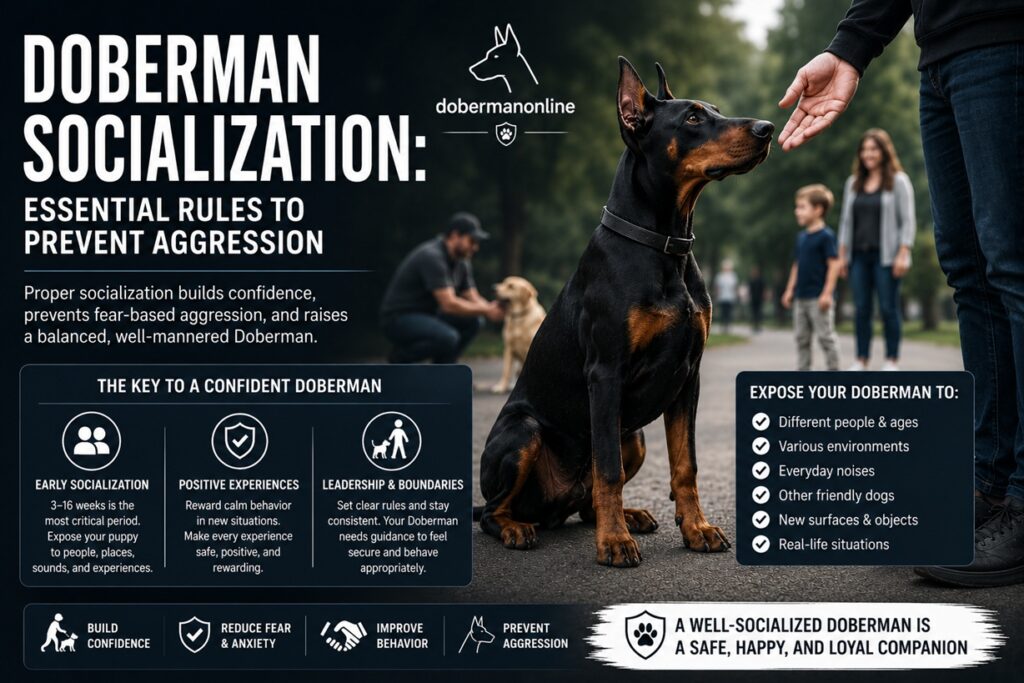
Why Socialization Matters for Dobermans
Dobermans are highly observant dogs. They quickly learn to assess situations and respond to unfamiliar people, animals, and environments. If a puppy lacks positive exposure during its developmental stages, it may become suspicious, anxious, or overly defensive later in life.
Proper socialization teaches your Doberman that new experiences are normal and not something to fear.
Benefits of early socialization include:
- Increased confidence in unfamiliar situations
- Reduced fear and anxiety
- Better behavior around strangers
- Improved interactions with other dogs
- Lower risk of territorial aggression
- Easier training and handling
The Critical Socialization Window
The most important period for socialization occurs between 3 and 16 weeks of age.
During this developmental stage, puppies are naturally more open to new experiences. Positive encounters during these weeks help shape lifelong behavior patterns.
A common mistake is believing socialization only means meeting other dogs. In reality, socialization includes exposure to a wide variety of sights, sounds, people, and environments.
Your Doberman puppy should gradually experience:
- Different types of flooring and surfaces
- Busy streets and quiet neighborhoods
- People of different ages and appearances
- Men with beards, hats, or uniforms
- Children playing and running
- Traffic sounds and household noises
- Bicycles, skateboards, and strollers
- Veterinary clinics and grooming environments
The goal is to create positive associations with everyday life.
1. Create Positive Experiences
Every new encounter should be enjoyable and rewarding.
When introducing your Doberman puppy to unfamiliar people or environments, use praise, treats, and encouragement. Avoid forcing interactions if your puppy appears nervous.
Allow your puppy to approach new situations at its own pace. Confidence grows through successful experiences, not pressure.
Reward calm behavior consistently so your Doberman learns that staying relaxed leads to positive outcomes.
2. Introduce Different Stimuli Gradually
Many adult behavioral problems develop because puppies were never exposed to common everyday situations.
Introduce new stimuli in a controlled manner, including:
- Umbrellas opening
- Children playing
- Joggers and cyclists
- Vacuum cleaners
- Doorbells
- Crowded public spaces
- Other friendly dogs
Start at a comfortable distance and gradually decrease that distance as your puppy becomes more confident.
Never overwhelm your puppy with too many challenges at once.
3. Establish Leadership and Boundaries
Dobermans thrive when they have clear guidance from their owners.
Socialization does not mean allowing every behavior. Your puppy should learn appropriate manners while exploring the world.
If your Doberman becomes overly protective or fixated on a person, dog, or object, calmly redirect its attention back to you. Reward focus and engagement.
Consistent leadership helps your Doberman understand that you are responsible for handling situations, reducing the need for the dog to make decisions independently.
Common Socialization Mistakes
Many owners unintentionally create problems by:
- Waiting too long to begin socialization
- Forcing interactions with strangers
- Punishing fearful behavior
- Exposing puppies to overwhelming environments
- Assuming socialization ends after puppyhood
Socialization is an ongoing process that should continue throughout your Doberman’s life.
Can Adult Dobermans Be Socialized?
Yes.
While early socialization is ideal, adult Dobermans can still learn new behaviors and become more comfortable in unfamiliar situations.
The process simply requires more patience, consistency, and sometimes professional guidance from an experienced trainer.
Progress may be slower than with a puppy, but significant improvements are often possible.
A well-socialized Doberman is confident, stable, and capable of distinguishing between genuine threats and everyday situations. Early exposure to people, environments, sounds, and experiences creates a foundation for a lifetime of balanced behavior.
The effort you invest during puppyhood can help prevent many behavioral issues later and ensure your Doberman becomes the loyal, trustworthy companion the breed is known for.
-
 YouTube: DobermanOnline
Frequently Asked Questions
When should Doberman socialization begin?
Socialization should begin as early as possible, ideally around 8 weeks of age, while following your veterinarian’s vaccination recommendations and safety guidelines.
Can an adult Doberman still be socialized?
Yes. Adult Dobermans can be successfully socialized, although the process may take longer and require more structured training.
Why does my Doberman bark excessively outside?
Excessive barking is often linked to fear, uncertainty, or overexcitement. Gradual exposure combined with rewards for calm behavior can help reduce the problem.
Is dog park exposure necessary for socialization?
No. Quality socialization is about positive experiences, not simply interacting with as many dogs as possible. Controlled and safe encounters are often more beneficial than crowded dog parks.
Can poor socialization cause aggression?
Lack of socialization can contribute to fear-based aggression, territorial behavior, and reactivity. Early positive exposure significantly reduces these risks.