Why Is My Doberman Shaking? Causes, Warning Signs & When to Worry (2026 Guide)

Why Is My Doberman Shaking? Causes, Warning Signs & When to Worry (2026 Guide)
If you’ve noticed your Doberman suddenly shaking, trembling, or shivering, it’s natural to feel concerned. While shaking can sometimes be completely harmless, it may also signal pain, illness, poisoning, or a neurological condition that requires immediate veterinary attention.
Dobermans are highly intelligent, energetic, and emotionally sensitive dogs. Their bodies often respond to excitement, fear, stress, temperature changes, and medical conditions by shaking. Understanding the difference between normal trembling and a serious health problem can help you act quickly when your dog truly needs help.
In this guide, you’ll learn why Dobermans shake, how to identify the most common causes, what warning signs to watch for, and when it’s time to contact your veterinarian.
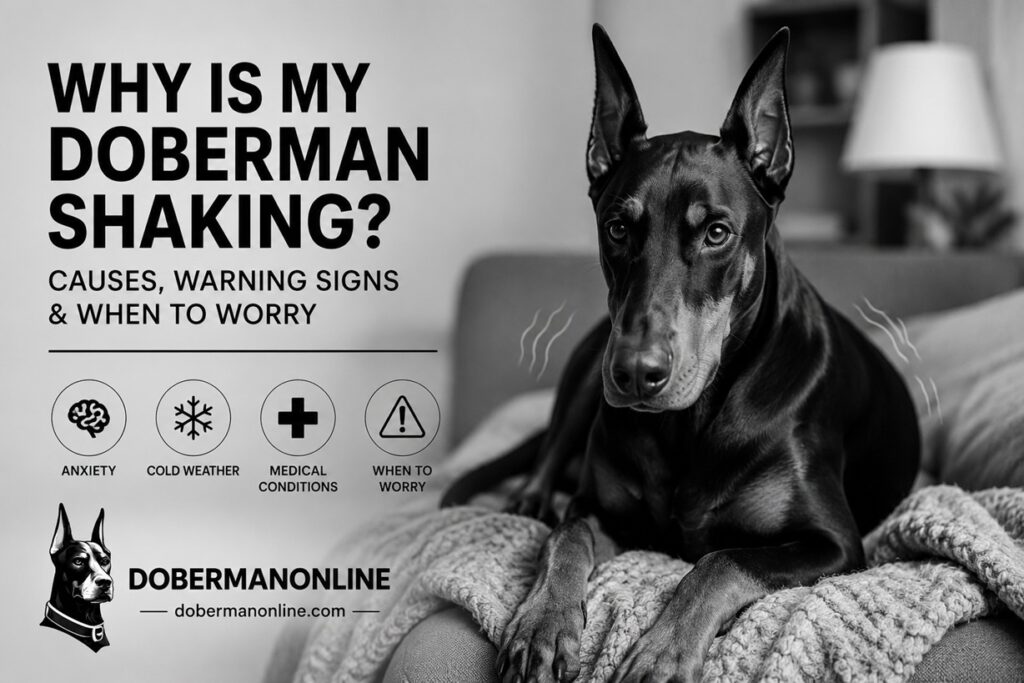
Why Is My Doberman Shaking? (Quick Answer)
A Doberman may shake because of excitement, cold temperatures, anxiety, fear, stress, dreaming during sleep, or after getting wet. However, shaking can also be caused by pain, fever, poisoning, low blood sugar, neurological disorders, or other medical conditions. If the shaking is severe, persistent, or accompanied by symptoms such as vomiting, weakness, collapse, difficulty walking, or seizures, your dog should be examined by a veterinarian immediately.
Is It Normal for a Doberman to Shake?
Yes—sometimes.
Occasional shaking is completely normal in healthy Dobermans. Like people, dogs can tremble when they’re excited, nervous, or cold.
Normal shaking usually has a clear cause, lasts only a short time, and stops once the situation changes. For example, your Doberman may shake with excitement when you arrive home or after an energetic play session.
The concern begins when shaking occurs without an obvious reason, becomes frequent, or is accompanied by other unusual symptoms.
Ask yourself these questions:
- Is my Doberman acting normally?
- Is the shaking temporary?
- Did something stressful just happen?
- Is my dog eating and drinking normally?
- Are there any signs of pain or illness?
If the answers raise concern, it’s time to investigate further.
Common Normal Reasons Your Doberman May Shake
1. Excitement
Dobermans are one of the most emotionally expressive dog breeds. Many owners notice their dog trembling before a walk, during playtime, or when greeting family members.
This type of shaking happens because adrenaline increases rapidly during moments of excitement.
Common situations include:
- Seeing their favorite person
- Preparing for a walk
- Playing fetch
- Meeting visitors
- Anticipating food
Once your Doberman calms down, the trembling should disappear within a few minutes.
2. Cold Weather
Despite their athletic appearance, Dobermans have a very short, single-layer coat with minimal body fat.
Because they lack thick insulation, they become cold much faster than many other breeds.
Signs your Doberman is cold include:
- Shivering
- Curling into a ball
- Seeking blankets
- Reluctance to stay outside
- Cold ears and paws
During winter, consider using a properly fitted dog coat for outdoor walks and avoid prolonged exposure to freezing temperatures.
3. Drying Off After Getting Wet
One of the most common reasons dogs shake is simply to remove excess water from their coat.
This full-body shake is completely normal after:
- Baths
- Swimming
- Rain
- Playing with sprinklers
It’s an instinctive behavior that helps dogs dry themselves quickly.
4. Dreaming During Sleep
If your Doberman shakes, twitches, paddles their legs, or softly barks while sleeping, they are most likely dreaming.
Dogs experience REM (Rapid Eye Movement) sleep just like humans.
During this stage you may notice:
- Paw movements
- Ear twitching
- Facial muscle movements
- Gentle shaking
- Quiet vocalizations
Unless the movements become violent or resemble seizures, there is usually no reason for concern.
5. Mild Stress or Nervousness
Dobermans are extremely aware of their surroundings and often react physically to unfamiliar situations.
They may shake during:
- Fireworks
- Thunderstorms
- Vet visits
- Car rides
- Meeting strangers
- Loud noises
Once the stressful event ends, the trembling should gradually stop.
If stress-related shaking occurs frequently, addressing the underlying anxiety can significantly improve your dog’s quality of life.
Signs That Shaking Is Probably Normal
Shaking is usually harmless when your Doberman:
- Stops shaking after calming down
- Is alert and responsive
- Continues eating and drinking normally
- Wants to play and exercise
- Has no vomiting or diarrhea
- Walks normally
- Shows no signs of pain
In these cases, observation is often all that’s required.
Behavioral Causes of Shaking in Dobermans
Not all shaking is caused by illness. Because Dobermans are an intelligent, loyal, and emotionally sensitive breed, their mental state can have a significant impact on their physical behavior. Anxiety, fear, and emotional stress are among the most common non-medical reasons for trembling.
Learning to recognize these triggers can help you respond appropriately and reduce unnecessary stress for your dog.
Anxiety
Dobermans often develop strong emotional bonds with their owners. While this loyalty makes them wonderful companions, it can also make them more susceptible to anxiety.
An anxious Doberman may shake when faced with unfamiliar situations or sudden changes in routine.
Common anxiety triggers include:
- Being left alone
- Visiting unfamiliar places
- Loud environments
- New pets or people
- Changes in household routine
Other signs of anxiety include:
- Panting
- Pacing
- Lip licking
- Excessive yawning
- Restlessness
- Dilated pupils
If your Doberman frequently trembles during stressful situations, identifying the trigger is the first step toward helping them feel more secure.
Fear
Fear-related shaking is different from excitement. A frightened Doberman often displays defensive body language in addition to trembling.
Signs of fear include:
- Tail tucked tightly
- Flattened ears
- Avoiding eye contact
- Hiding
- Cowering
- Attempting to escape
Common causes include:
- Fireworks
- Thunderstorms
- Vacuum cleaners
- Construction noise
- Aggressive dogs
- Traumatic experiences
Never punish a fearful dog. Calm reassurance, distance from the trigger, and gradual desensitization are much more effective.
Separation Anxiety
Dobermans are frequently described as “Velcro dogs” because they love staying close to their owners.
Some individuals become extremely distressed when left alone, leading to trembling before or after separation.
Symptoms often include:
- Shaking
- Excessive barking
- Destructive chewing
- Scratching doors
- Drooling
- House soiling
- Pacing
If your Doberman only shakes when you prepare to leave the house or shortly after you return, separation anxiety could be the underlying cause.
Related article: Doberman Separation Anxiety: Signs, Causes & Training Solutions
Overstimulation
Young Dobermans especially can become overwhelmed after intense exercise, training sessions, or exciting social interactions.
Too much excitement may temporarily overload their nervous system.
Your dog may:
- Tremble
- Pant heavily
- Pace
- Have difficulty settling down
Providing a quiet environment and allowing time to relax usually resolves the issue.
Medical Causes of Shaking in Dobermans
Although many cases of shaking are harmless, persistent or unexplained trembling should never be ignored.
Several medical conditions can cause shaking, some of which require immediate veterinary treatment.
Pain or Injury
Dogs instinctively hide pain, making shaking one of the first noticeable signs.
Pain-related trembling may occur because of:
- Muscle strains
- Joint injuries
- Arthritis
- Back pain
- Dental pain
- Broken nails
- Internal injuries
Watch for additional symptoms such as:
- Limping
- Whining
- Reluctance to move
- Aggression when touched
- Difficulty standing
Fever
Just like humans, dogs may shiver when they have a fever.
A fever is often caused by:
- Infection
- Inflammation
- Tick-borne diseases
- Viral illness
Other symptoms include:
- Warm ears
- Warm nose
- Lethargy
- Loss of appetite
- Increased sleeping
A veterinarian should evaluate any suspected fever promptly.
Low Blood Sugar (Hypoglycemia)
Hypoglycemia is most common in puppies but can also occur in adult dogs with certain medical conditions.
Symptoms include:
- Shaking
- Weakness
- Confusion
- Stumbling
- Collapse
- Seizures
This condition can become life-threatening if left untreated.
Poisoning
Trembling is one of the earliest signs of toxin exposure.
Common toxins include:
- Chocolate
- Xylitol
- Grapes
- Raisins
- Certain medications
- Household cleaners
- Rodenticides
- Toxic plants
Other warning signs include:
- Vomiting
- Diarrhea
- Excessive drooling
- Difficulty breathing
- Collapse
- Seizures
If poisoning is suspected, seek emergency veterinary care immediately.
Neurological Disorders
Shaking may originate from the nervous system rather than the muscles.
Possible neurological causes include:
- Brain disease
- Spinal cord disorders
- Nerve injuries
- Inflammatory conditions
Symptoms often include:
- Loss of coordination
- Head tilt
- Difficulty walking
- Muscle weakness
- Abnormal eye movements
Wobbler Syndrome
Dobermans are one of the breeds most commonly affected by Wobbler Syndrome, a condition involving compression of the spinal cord in the neck.
Early signs include:
- Trembling
- Weakness
- Unsteady walking
- Dragging the rear feet
- Neck pain
- Difficulty standing
Because Wobbler Syndrome can progress over time, early diagnosis is important for improving long-term outcomes.
Related article: Wobbler Syndrome in Dobermans: Early Signs, Treatment, and Daily Management Guide
Seizures
Not all shaking is simple trembling.
A seizure may involve:
- Violent body movements
- Loss of consciousness
- Drooling
- Paddling legs
- Urination
- Confusion afterward
Any suspected seizure should be treated as a medical emergency and evaluated by a veterinarian.
When Should You Call a Veterinarian?
While occasional shaking is often harmless, certain symptoms should never be ignored. Contact your veterinarian immediately if your Doberman’s shaking is severe, persistent, or accompanied by other signs of illness.
Seek veterinary care immediately if your Doberman:
- Cannot stand or walk normally
- Collapses or loses consciousness
- Has a seizure
- Is vomiting repeatedly
- Has severe diarrhea
- Has difficulty breathing
- Appears to be in significant pain
- Has been exposed to a possible toxin
- Shows pale or blue gums
- Develops a high fever
- Becomes unusually weak or lethargic
- Continues shaking for several hours without an obvious cause
Early treatment often leads to better outcomes, especially when neurological conditions, poisoning, or severe infections are involved.
How to Help a Shaking Doberman at Home
If your Doberman appears otherwise healthy and the shaking seems mild or related to a temporary situation, there are several things you can do before assuming the worst.
Keep Your Dog Warm
Dobermans have a short coat and can lose body heat quickly.
If your dog feels cold:
- Bring them indoors.
- Dry them thoroughly if wet.
- Provide a warm blanket.
- Use a properly fitted dog jacket during cold-weather walks.
Reduce Stress
If anxiety appears to be the cause:
- Move your dog to a quiet room.
- Speak calmly.
- Avoid punishment.
- Play relaxing background music.
- Offer a favorite toy or chew.
Remaining calm yourself can also help your Doberman relax.
Check for Injuries
Gently inspect your dog for:
- Cuts
- Swelling
- Limping
- Broken nails
- Pain when touched
Never force movement if you suspect a spinal or orthopedic injury.
Offer Fresh Water
Mild dehydration can sometimes contribute to weakness.
Always ensure your Doberman has access to clean drinking water.
If your dog refuses water for an extended period or cannot keep water down, contact your veterinarian.
Observe the Pattern
Keep track of:
- When the shaking started
- How long it lasts
- What happened beforehand
- Any additional symptoms
- Whether it improves or worsens
Recording a short video of the shaking can also help your veterinarian identify the underlying cause.
Can Stress Alone Cause a Doberman to Shake?
Yes.
Dobermans are among the most emotionally sensitive working breeds.
Stress hormones such as adrenaline can trigger temporary muscle tremors, particularly during:
- Thunderstorms
- Fireworks
- Veterinary visits
- Travel
- New environments
- Separation from family members
If stress is the only cause, the shaking usually improves once your dog feels safe again.
Can Puppies Shake More Than Adult Dobermans?
Absolutely.
Doberman puppies often shake more frequently because they:
- Become excited easily
- Lose body heat faster
- Experience rapid emotional changes
- May develop temporary low blood sugar
- Are still learning to regulate their responses to new situations
However, persistent trembling in a puppy should always be evaluated promptly because young dogs can become seriously ill much faster than adults.
Prevention Tips
Although not every cause of shaking can be prevented, healthy daily habits can significantly reduce your Doberman’s risk.
Helpful prevention strategies include:
- Provide regular veterinary checkups.
- Keep vaccinations current.
- Feed a balanced, high-quality diet.
- Prevent access to toxic foods and chemicals.
- Maintain a healthy body weight.
- Exercise daily without overexertion.
- Provide mental stimulation.
- Reduce chronic stress.
- Keep your Doberman warm during cold weather.
- Monitor for changes in behavior.
Routine observation is one of the best tools owners have for detecting health problems early.
Watch more Doberman videos on our official YouTube channel : DobermanOnline
Frequently Asked Questions
Can Dobermans shake when they’re happy?
Yes. Many Dobermans tremble with excitement before walks, meals, or seeing their favorite people. This type of shaking is usually brief and completely normal.
Is shaking common in Doberman puppies?
Yes. Puppies may shake because of excitement, cold temperatures, stress, or temporary low blood sugar. Persistent or severe shaking should always be evaluated by a veterinarian.
Should I be worried if my Doberman shakes after exercise?
Mild trembling immediately after intense activity can occur due to muscle fatigue or excitement. If the shaking continues after your dog has rested or is accompanied by weakness, pain, or collapse, veterinary evaluation is recommended.
Can anxiety make a Doberman shake?
Absolutely. Anxiety, fear, separation stress, and unfamiliar situations commonly cause temporary trembling in this breed.
What toxins commonly cause shaking in dogs?
Chocolate, xylitol, grapes, raisins, certain medications, rodenticides, household cleaners, and many toxic plants can all cause shaking and require immediate emergency veterinary care.